If you’re struggling to afford Medicare premiums or other out-of-pocket costs, the Idaho Medicare Savings Program may be able to help. Medicare Savings Programs (MSPs) are Medicaid-administered programs that help eligible people with limited income pay certain Medicare expenses, such as Part A and Part B premiums and, in some cases, deductibles, coinsurance, and copayments.
Understanding how these programs work can help you determine whether you qualify for financial assistance and reduce your healthcare costs. Because eligibility is based on federal and state rules, it’s important to review the current requirements before applying.
In this guide, you’ll learn what the Idaho Medicare Savings Program is, who administers it, the different types of Medicare Savings Programs available in Idaho, and the benefits each program may provide.
Quick Answer
The Idaho Medicare Savings Program is a group of Medicaid-administered programs that help eligible Medicare beneficiaries with limited income pay certain Medicare costs.
Depending on the specific program and your eligibility, assistance may include:
- Medicare Part A premiums (when applicable)
- Medicare Part B premiums
- Medicare deductibles
- Medicare coinsurance
- Medicare copayments
Eligibility depends on factors such as your Medicare enrollment, income, resources (when applicable under current rules), and other program requirements.
What Is the Idaho Medicare Savings Program?

The Idaho Medicare Savings Program is not a single benefit. Instead, it refers to several Medicare Savings Programs that help qualified Medicare beneficiaries lower their healthcare costs.
These programs are designed for people who:
- Are enrolled in Medicare or eligible for Medicare.
- Meet the financial eligibility requirements.
- Satisfy other state and federal program rules.
For many beneficiaries, the largest benefit is assistance with paying the monthly Medicare Part B premium. Depending on the program, additional Medicare cost-sharing expenses may also be covered.
Medicare Savings Programs are different from Medicare Advantage plans and Medicare Supplement (Medigap) policies. Rather than replacing Medicare coverage, they help eligible beneficiaries pay certain Medicare-related expenses.
Because program rules may change, applicants should always review the latest eligibility requirements before applying.
Official Source: Idaho Department of Health and Welfare – Medicare Savings Programs
Who Administers the Idaho Medicare Savings Program?
In Idaho, Medicare Savings Programs are administered through the Idaho Department of Health and Welfare (IDHW) as part of the state’s Medicaid program.
The department is responsible for:
- Accepting and reviewing applications
- Determining eligibility
- Verifying financial information
- Approving qualified applicants
- Coordinating Medicare Savings Program benefits
Applicants may also receive free counseling from Idaho’s State Health Insurance Assistance Program (SHIP), which provides unbiased Medicare information and can help beneficiaries understand their coverage options.
While SHIP counselors can explain the programs and answer Medicare questions, the Idaho Department of Health and Welfare makes eligibility determinations for Medicare Savings Programs.
Types of Medicare Savings Programs in Idaho
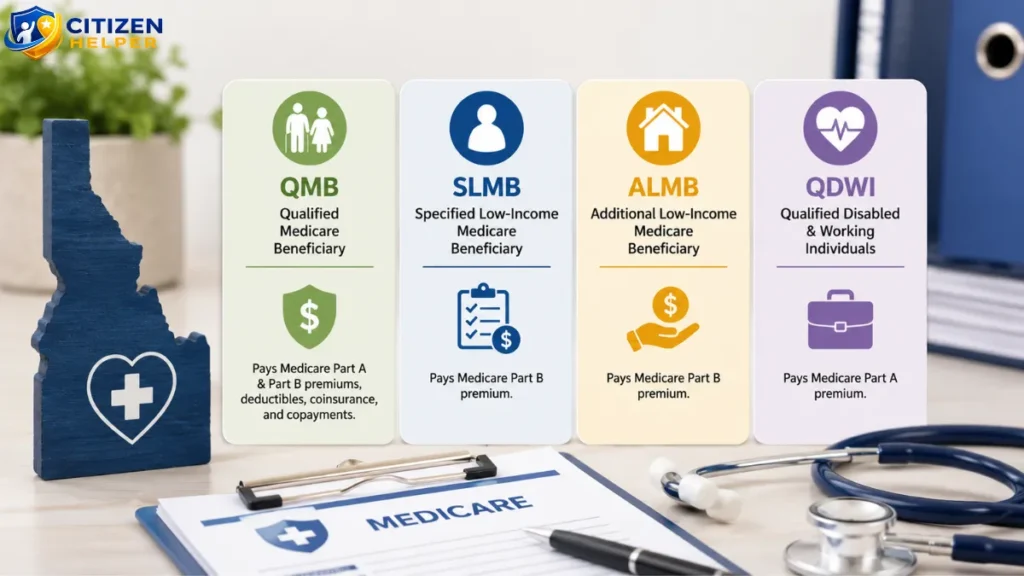
Idaho offers several Medicare Savings Programs established under federal law. Each program helps with different Medicare costs and has its own eligibility requirements.
Qualified Medicare Beneficiary (QMB)
The Qualified Medicare Beneficiary (QMB) program provides the broadest level of assistance.
For eligible beneficiaries, QMB generally helps pay:
- Medicare Part A premiums, when applicable
- Medicare Part B premiums
- Medicare deductibles
- Medicare coinsurance
- Medicare copayments
People enrolled in QMB also receive important billing protections under federal law for Medicare-covered services.
Specified Low-Income Medicare Beneficiary (SLMB)
The Specified Low-Income Medicare Beneficiary (SLMB) program primarily helps eligible individuals pay their Medicare Part B premium.
Unlike QMB, SLMB generally does not pay Medicare deductibles or coinsurance.
Qualifying Individual (QI)
The Qualifying Individual (QI) program also helps eligible beneficiaries pay their Medicare Part B premium.
Because QI funding is limited, eligible individuals must generally reapply each year, and benefits are approved on a first-come, first-served basis while funding remains available.
Qualified Disabled and Working Individual (QDWI)
The Qualified Disabled and Working Individual (QDWI) program helps certain eligible individuals pay their Medicare Part A premium.
QDWI is intended for a much smaller group of beneficiaries who meet specific federal eligibility requirements.
The availability of these programs gives Idaho residents several options depending on their Medicare status and financial circumstances.
What Benefits Do Medicare Savings Programs Provide?

The assistance available through an Idaho Medicare Savings Program depends on the specific program for which you qualify.
Potential benefits include help paying:
- Medicare Part A premiums
- Medicare Part B premiums
- Medicare deductibles
- Medicare coinsurance
- Medicare copayments
For many beneficiaries, having their Medicare Part B premium paid by a Medicare Savings Program can significantly reduce monthly healthcare expenses.
In addition, individuals who qualify for certain Medicare Savings Programs may also automatically qualify for the Medicare Extra Help program, which assists with eligible Medicare Part D prescription drug costs, if they meet the applicable federal requirements.
Because each Medicare Savings Program provides different levels of assistance, understanding the available benefits can help you determine which program best fits your situation.
Who Is Eligible for the Idaho Medicare Savings Program?
Eligibility for an Idaho Medicare Savings Program depends on the specific Medicare Savings Program (MSP) you are applying for. Although each program has different financial requirements, applicants generally must meet several basic conditions.
In most cases, you must:
- Be enrolled in Medicare Part A or be eligible for Medicare Part A, depending on the specific MSP.
- Live in Idaho.
- Meet the income requirements for the program.
- Meet any applicable resource requirements under current federal and state rules.
- Satisfy all other eligibility requirements established by the Idaho Department of Health and Welfare.
Because eligibility rules can change, applicants should verify the current requirements before submitting an application.
Income and Resource Limits
One of the most common questions applicants ask is whether their income is low enough to qualify.
The answer depends on:
- Which Medicare Savings Program you are applying for (QMB, SLMB, QI, or QDWI).
- Your household size.
- Your monthly income.
- Whether applicable federal resource limits apply to your program.
Income limits are updated periodically, and eligibility is based on current federal and state guidelines.
Rather than relying on outdated charts found online, review the latest limits published by the Idaho Department of Health and Welfare or Medicare before applying.
Keep in mind that not every type of income or asset is treated the same way when eligibility is determined. Program rules identify what must be counted and what may be excluded.
What Medicare Expenses Can the Program Help Pay?

The amount of financial assistance depends on the Medicare Savings Program for which you qualify.
Depending on the program, assistance may include:
- Medicare Part A premiums
- Medicare Part B premiums
- Medicare deductibles
- Medicare coinsurance
- Medicare copayments
For many beneficiaries, having assistance with the monthly Part B premium is one of the most valuable benefits because it reduces ongoing healthcare expenses.
Some beneficiaries who qualify for a Medicare Savings Program may also automatically qualify for the Extra Help program for Medicare Part D prescription drug costs if they meet the applicable federal requirements.
Remember that each MSP offers different levels of assistance. For example, QMB generally provides broader cost-sharing assistance than SLMB or QI.
How to Apply for the Idaho Medicare Savings Program
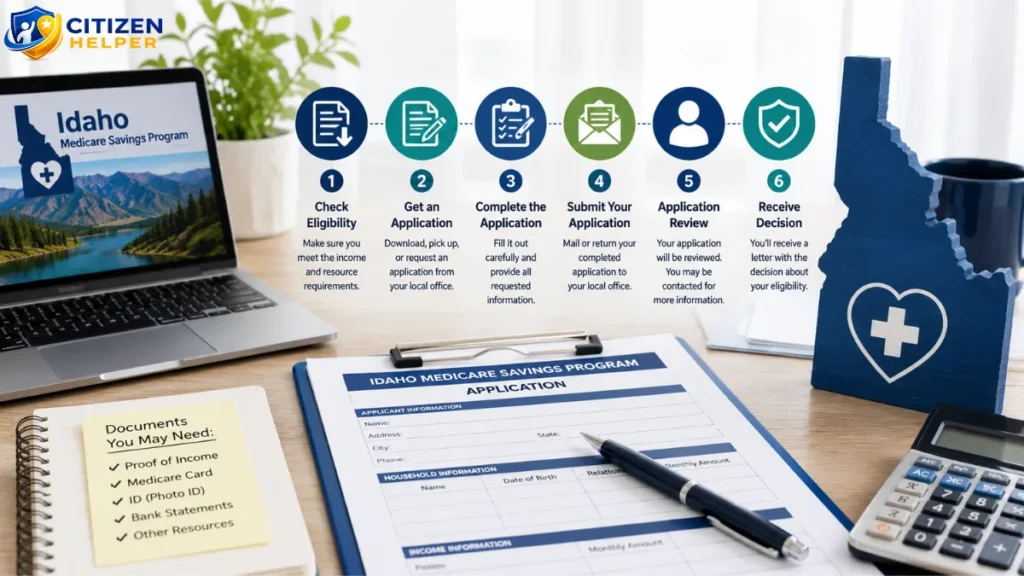
If you believe you may qualify, you can apply through the Idaho Department of Health and Welfare.
Although application methods may change over time, Idaho generally allows eligible residents to apply through the state’s Medicaid application process.
Before you apply:
- Review the current eligibility requirements.
- Gather the required documentation.
- Complete the application accurately.
- Submit any additional information requested by the state.
- Respond promptly if the department contacts you during the review process.
Providing complete and accurate information can help prevent unnecessary delays.
What Documents Will You Need?
The exact documents required depend on your situation, but applicants are commonly asked to provide information such as:
- Proof of identity
- Medicare information
- Social Security number
- Proof of Idaho residency
- Income documentation
- Information about financial resources, when applicable
- Health insurance information, if requested
The Idaho Department of Health and Welfare may request additional documentation if more information is needed to determine eligibility.
Having these documents ready before applying can make the process smoother.
What Happens After You Apply?
After receiving your application, the Idaho Department of Health and Welfare reviews your information to determine whether you qualify for a Medicare Savings Program.
During the review process, the department may:
- Verify your Medicare enrollment.
- Review your income and financial information.
- Confirm any applicable resource information.
- Request additional documents or clarification.
- Notify you of its eligibility decision.
If you are approved, your Medicare Savings Program benefits generally begin according to the applicable federal and state rules for your program.
If your application is denied, the notice should explain the reason for the decision and provide information about your appeal rights if you disagree with the determination.
Because every application is unique, processing times may vary depending on the completeness of your application and whether additional verification is required.
Can You Have Medicaid and a Medicare Savings Program?
Yes. In many cases, you can have Medicaid and participate in a Medicare Savings Program (MSP) at the same time if you meet the eligibility requirements for both programs.
Medicaid and Medicare Savings Programs are closely connected because MSPs are administered through each state’s Medicaid program. However, qualifying for one program does not automatically mean you qualify for every Medicaid benefit.
Some Idaho residents may:
- Have Medicare and full Medicaid benefits.
- Qualify only for a Medicare Savings Program.
- Qualify for a Medicare Savings Program and the Extra Help program for Medicare Part D prescription drug costs, if they meet the applicable federal requirements.
Your eligibility depends on your income, resources (when applicable), Medicare status, and other federal and state rules.
If you already receive Medicaid, it’s still worth asking whether you also qualify for a Medicare Savings Program that can help reduce your Medicare costs.
Common Mistakes to Avoid
Applying for the Idaho Medicare Savings Program can be easier if you avoid these common mistakes.
Assuming You Won’t Qualify Because You Own a Home
Some applicants believe homeownership automatically disqualifies them. Eligibility depends on the specific Medicare Savings Program rules, and not every asset is treated the same way.
Using Outdated Income Limits
Income guidelines are updated periodically. Always check the latest eligibility limits published by the Idaho Department of Health and Welfare or Medicare instead of relying on older information.
Waiting Too Long to Apply
If you think you may qualify, submit your application as soon as possible. Delaying could postpone financial assistance with Medicare costs.
Forgetting to Report Requested Information
If the Idaho Department of Health and Welfare asks for additional documentation, respond promptly. Missing information can delay the review process or result in a denial.
Confusing Medicare Savings Programs With Medicare Advantage
These are different programs.
- Medicare Savings Programs help eligible beneficiaries pay certain Medicare costs.
- Medicare Advantage (Part C) is an alternative way to receive Medicare-covered benefits through private insurance companies approved by Medicare.
Understanding this distinction can help you choose the right type of assistance.
Conclusion:
The Idaho Medicare Savings Program can provide valuable financial assistance for eligible Medicare beneficiaries by helping pay Medicare premiums and, depending on the specific program, other out-of-pocket costs such as deductibles, coinsurance, and copayments.
Whether you qualify depends on factors including your Medicare enrollment, income, applicable resource requirements, and the program you apply for. Because there are several Medicare Savings Programs—QMB, SLMB, QI, and QDWI—it’s important to understand how each one works and which may best fit your situation.
If you’re having difficulty paying Medicare expenses, reviewing your eligibility for an Idaho Medicare Savings Program could significantly reduce your healthcare costs. Before applying, verify the latest requirements with the Idaho Department of Health and Welfare or Medicare to ensure you have the most current information.
Frequently Asked Questions (FAQ)
What is the Idaho Medicare Savings Program?
The Idaho Medicare Savings Program is a group of Medicaid-administered programs that help eligible Medicare beneficiaries pay certain Medicare costs, such as Part A and Part B premiums and, for some programs, deductibles, coinsurance, and copayments.
Who qualifies for the Idaho Medicare Savings Program?
Eligibility depends on factors such as your Medicare enrollment, household income, applicable resource requirements, Idaho residency, and the specific Medicare Savings Program you are applying for.
Does the program pay Medicare Part B premiums?
Yes. Many Medicare Savings Programs help pay the Medicare Part B premium for eligible beneficiaries.
Can the program help with Medicare deductibles and coinsurance?
Some programs can. For example, the Qualified Medicare Beneficiary (QMB) program generally provides broader assistance than the SLMB or QI programs.
Do I need to renew my eligibility?
Yes. Beneficiaries may need to complete periodic eligibility reviews or renewals as required by the Idaho Department of Health and Welfare to continue receiving benefits.
Can I apply if I already have Medicare?
Yes. Medicare beneficiaries who meet the applicable eligibility requirements may apply for a Medicare Savings Program through the Idaho Department of Health and Welfare.