Getting approved for disability benefits can provide much-needed financial support if you’re unable to work because of a medical condition. One of the most common questions applicants ask is how long does it take to get disability. Unfortunately, there isn’t a single answer because processing times vary depending on your application, medical evidence, and whether your claim requires an appeal.
In general, many initial disability decisions take several months, while appeals can extend the process significantly. Certain applicants with severe medical conditions may qualify for faster processing through special Social Security Administration (SSA) programs.
In this guide, you’ll learn how long each stage of the disability application process typically takes, what factors can delay a decision, how payments begin after approval, and what you can do to avoid unnecessary delays.
Quick Answer
If you’re wondering how long does it take to get disability, here’s a general timeline:
| Stage | Typical Time |
| Initial application | Usually 3–8 months |
| Reconsideration appeal | Often several additional months |
| Hearing before an Administrative Law Judge | Frequently many months to more than a year, depending on the hearing office |
| First payment after approval | Depends on the benefit program and applicable payment rules |
Actual processing times vary by case and location.
Official Source: Social Security Administration – Disability Benefits
Understanding Disability Benefits
Before discussing the timeline, it’s important to understand the two primary disability programs administered by the Social Security Administration.
Social Security Disability Insurance (SSDI)
SSDI provides monthly benefits to people who have worked, paid Social Security taxes, and earned enough work credits before becoming disabled.
Eligibility depends on:
- Your work history
- Your medical condition
- SSA’s definition of disability
Supplemental Security Income (SSI)
SSI helps individuals with disabilities who have limited income and limited resources.
Unlike SSDI, SSI does not require a qualifying work history. Financial eligibility is an important part of the determination.
Official Source: Social Security Administration – Disability Benefits
Average Disability Application Timeline
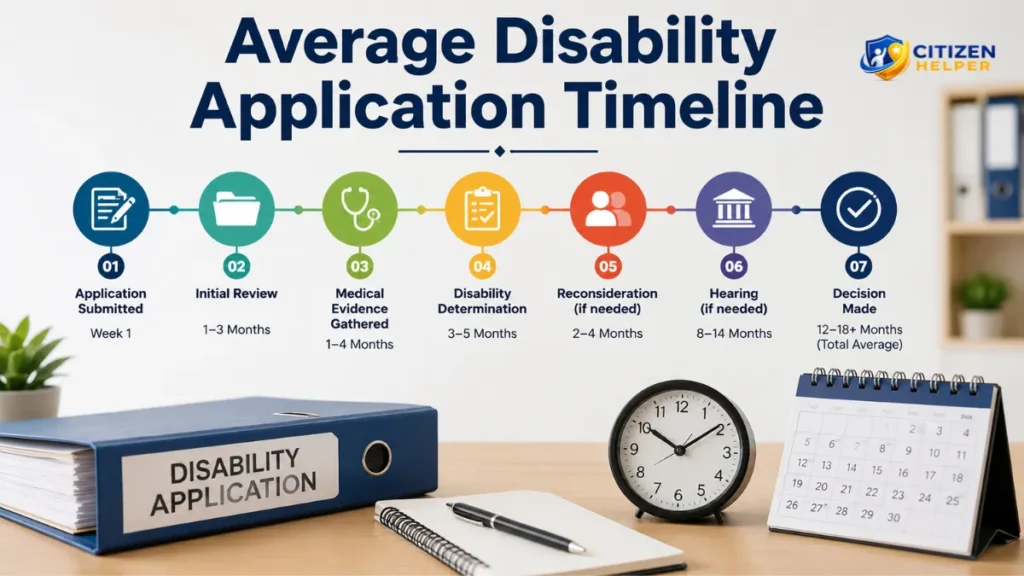
Every disability claim follows several steps. Understanding each one can help set realistic expectations.
Step 1: Submitting Your Application
You can apply:
- Online (for many SSDI applicants)
- By phone
- At your local Social Security office
During this stage, SSA collects:
- Personal information
- Employment history
- Medical records
- Doctor information
- Hospital records
- Medication history
Providing complete information at the beginning often helps prevent delays.
Step 2: Non-Medical Review
Before evaluating your medical condition, SSA verifies that you meet the basic non-medical requirements.
Depending on your claim, SSA reviews:
- Work credits (SSDI)
- Income and resources (SSI)
- Identity
- Citizenship or eligible immigration status
- Other eligibility requirements
If basic requirements are not met, the application may be denied without a full medical review.
Step 3: Medical Review by Disability Determination Services (DDS)
Most disability decisions are made after your case is sent to your state’s Disability Determination Services (DDS).
DDS specialists review:
- Medical records
- Physician reports
- Laboratory results
- Imaging studies
- Functional limitations
- Work history
- Education
- Age
If additional evidence is needed, DDS may contact your healthcare providers or schedule a Consultative Examination (CE) with an independent medical professional.
Waiting for medical records is one of the biggest reasons disability claims take several months.
Official Source: Social Security Administration – Disability Determination Process
Why Some Disability Applications Take Longer Than Others
No two disability claims are exactly alike. Several factors influence how quickly SSA can make a decision.
Incomplete Medical Records
Missing treatment records are one of the most common causes of delays.
Examples include:
- Recent hospital visits
- Specialist records
- Imaging reports
- Laboratory tests
- Mental health evaluations
The more complete your medical documentation, the easier it is for DDS to evaluate your claim.
Multiple Medical Conditions
Applicants with several medical conditions often require additional review because SSA must evaluate the combined impact of every impairment.
For example, someone may have:
- Diabetes
- Heart disease
- Arthritis
- Depression
Each condition must be documented and considered together.
Consultative Examinations
If SSA believes additional medical information is necessary, you’ll receive an appointment for a Consultative Examination (CE).
Missing this appointment can delay your claim or even lead to a denial based on insufficient evidence.
High Application Volume
Processing times also depend on:
- Staffing levels
- Number of applications
- Local DDS workload
- Hearing office backlog
These factors are outside an applicant’s control.
Can Some Disability Claims Be Approved Faster?

Yes. The Social Security Administration has programs designed to quickly identify claims involving severe medical conditions.
Compassionate Allowances (CAL)
The Compassionate Allowances initiative allows SSA to identify certain serious diseases that clearly meet disability standards.
Examples include some:
- Aggressive cancers
- Rare neurological disorders
- Severe genetic conditions
Eligible claims may be processed much faster than standard disability applications.
Official Source: Social Security Administration – Compassionate Allowances
Quick Disability Determination (QDD)
SSA also uses Quick Disability Determination (QDD) technology to identify applications with a high likelihood of approval based on the medical evidence provided.
Not every applicant qualifies, and SSA determines eligibility automatically.
Official Source: Social Security Administration – Disability Programs
What Happens After Your Disability Is Approved?
Receiving an approval letter is a major milestone, but it does not always mean your benefits will start immediately. The timeline for receiving your first payment depends on whether you qualify for Social Security Disability Insurance (SSDI) or Supplemental Security Income (SSI).
SSA will send you a notice explaining:
- Whether your claim was approved
- The date your disability began (called the established onset date)
- Your monthly benefit amount, if applicable
- When your payments are expected to begin
- Whether you will receive back pay
Review your approval notice carefully and contact SSA if any information appears incorrect.
Official Source: Social Security Administration – Disability Benefits
How Long Does It Take to Receive Your First SSDI Payment?
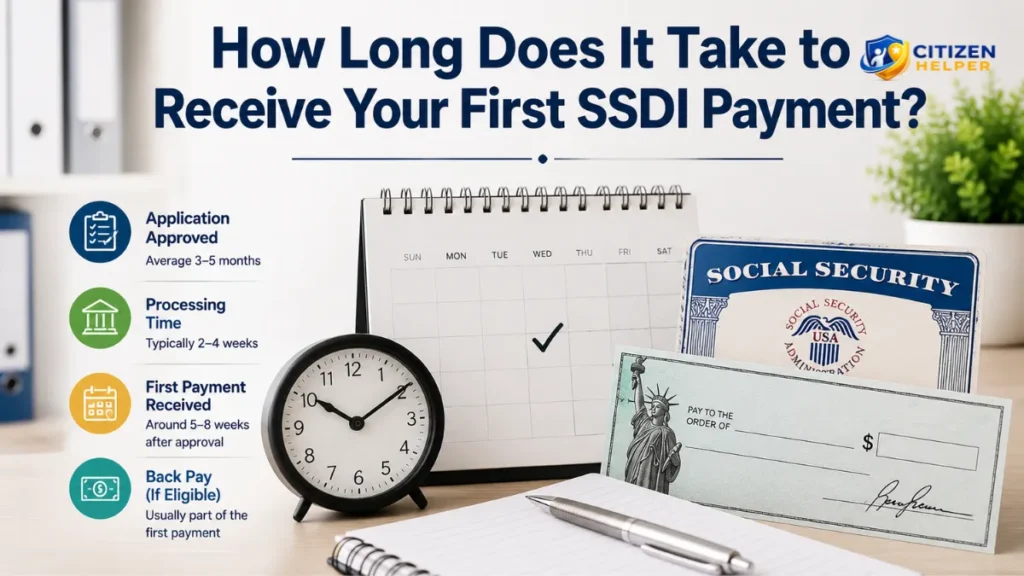
If you’re approved for SSDI, your first payment may not arrive immediately.
Federal law generally requires a five-month waiting period after the established onset date before SSDI cash benefits can begin. In many cases, this waiting period has already passed by the time a decision is made because the application process itself often takes several months.
After approval, SSA processes your award and schedules your monthly payments according to its payment calendar.
Some applicants receive their first payment within a few weeks after approval, while others may wait longer depending on the processing of their claim.
Official Source: Social Security Administration – Disability Benefits
How Long Does It Take to Receive SSI Payments?
The payment process for SSI is different.
Because SSI is a needs-based program, SSA may need to verify:
- Current income
- Financial resources
- Living arrangements
- Household information
Some applicants are asked to complete an additional interview before benefits begin.
Once SSA finishes verifying eligibility, payments can usually begin according to the SSI payment schedule.
Official Source: Social Security Administration – Supplemental Security Income
Will You Receive Disability Back Pay?
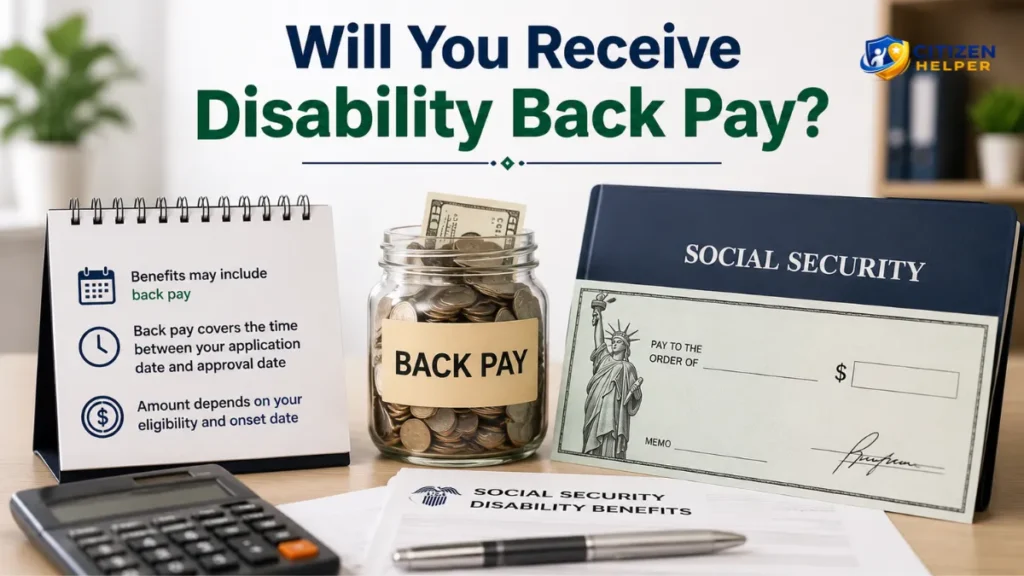
Many approved applicants receive back pay, but the amount and payment schedule depend on the program and the facts of the case.
Back pay may cover months during which you were eligible but had not yet started receiving benefits.
Several factors can affect back pay, including:
- Your disability onset date
- Your application date
- The type of disability benefit
- Applicable waiting periods
- SSA payment rules
SSA explains any back pay included in your award notice.
Official Source: Social Security Administration – Disability Benefits
What If Your Disability Claim Is Denied?
A denial does not necessarily mean you are ineligible for disability benefits.
Many applicants continue through the appeals process.
The disability appeals process may include:
- Reconsideration
- Hearing before an Administrative Law Judge
- Appeals Council review
- Federal court review
Each level can add several months—or longer—to the overall timeline.
Providing stronger medical evidence during an appeal may improve your chances of success.
Official Source: Social Security Administration – Appeal a Decision
Common Reasons Disability Claims Are Delayed
Although some delays are outside your control, many can be avoided.
Common reasons include:
- Missing medical records
- Incomplete application forms
- Incorrect contact information
- Delayed responses from healthcare providers
- Missed consultative examinations
- Failure to respond to SSA requests
- Large caseloads at DDS or local SSA offices
Responding promptly to SSA requests can help keep your application moving.
How to Speed Up Your Disability Application
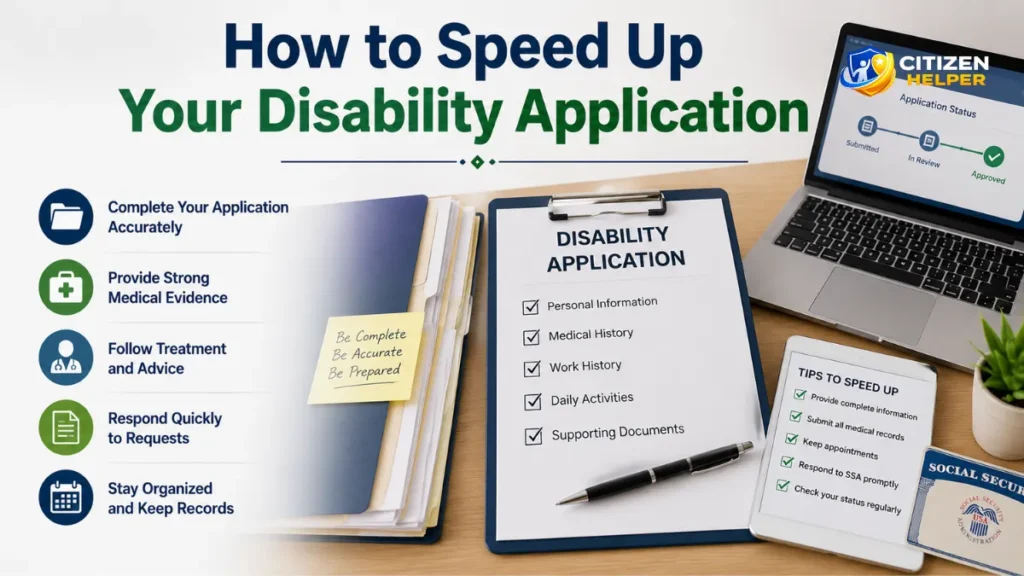
While you cannot guarantee a faster decision, these steps may help reduce unnecessary delays.
Submit Complete Medical Information
Include every healthcare provider who has treated your condition, along with accurate contact information and treatment dates.
Continue Receiving Medical Treatment
Ongoing treatment creates updated medical records that help SSA evaluate your disability.
Respond Quickly to SSA Requests
If SSA asks for additional documents or schedules a medical examination, respond as soon as possible.
Keep Your Contact Information Current
Notify SSA immediately if you change your:
- Address
- Phone number
- Email address (if applicable)
This helps ensure you receive important notices without delay.
Attend Every Scheduled Examination
Missing a consultative examination can significantly delay your claim or result in a denial if SSA does not have enough medical evidence.
Factors That Can Affect Your Disability Timeline
Several variables influence how long it takes to get disability benefits.
| Factor | Possible Impact |
| Complete medical records | May help avoid delays |
| Missing documentation | Can extend processing time |
| Severe medical condition | May qualify for expedited review |
| Additional medical exams | Can increase processing time |
| Appeals | Often add many months to the process |
| Local SSA and DDS workload | Processing times vary by location |
Remember that every disability claim is unique, so no timeline is guaranteed.
Conclusion
If you’re asking how long does it take to get disability, the answer depends on your individual circumstances. While many initial decisions are made within several months, others take longer because of medical evidence, additional reviews, or appeals.
Submitting a complete application, keeping your medical records up to date, responding promptly to SSA requests, and attending all scheduled examinations can help reduce avoidable delays. If your claim is denied, remember that you have the right to appeal the decision.
Because disability rules and processing times can change, always verify the latest information directly with the Social Security Administration before making important decisions.
Frequently Asked Questions (FAQ)
How long does it take to get disability after applying?
Many initial disability applications are decided within several months, but some claims take longer depending on the evidence, workload, and whether additional medical information is required.
Can disability be approved in less than three months?
Yes. Some claims involving severe medical conditions may qualify for expedited processing through programs such as Compassionate Allowances (CAL) or Quick Disability Determination (QDD).
Does hiring a lawyer make disability faster?
An attorney or qualified representative cannot guarantee faster processing. However, they may help prepare a complete application, gather medical evidence, and represent you during the appeals process if necessary.
Why is my disability application taking so long?
Common reasons include incomplete medical records, additional medical evaluations, high case volumes, or delays in obtaining records from healthcare providers.
Can I work while waiting for a disability decision?
Possibly, but working above SSA’s allowable limits may affect eligibility for disability benefits. The rules vary depending on your situation, so review SSA’s work incentive guidance before accepting employment.