If your Permanent Resident Card is about to expire, one of the first questions you may have is how long does it take to renew a Green Card. While renewing your Green Card is usually a straightforward process, the waiting period can vary depending on your individual case and current processing times at the U.S. Citizenship and Immigration Services (USCIS).
Most lawful permanent residents renew their Green Cards by filing Form I-90, Application to Replace Permanent Resident Card. After submitting the application, you’ll receive confirmation from USCIS, and your renewal request will be processed before a new card is issued. Understanding the typical timeline can help you plan ahead, avoid unnecessary stress, and ensure you continue to have proof of your permanent resident status.
In this guide, you’ll learn the average Green Card renewal processing time, the factors that can affect your application, how to check your case status, and what to do if your renewal takes longer than expected.
Quick Answer
The answer to how long does it take to renew a Green Card depends on current USCIS processing times. In many cases, applicants receive their new Green Card within several months, although processing times can be longer depending on application volume, background checks, requests for additional evidence, or other case-specific factors.
Because processing times change throughout the year, it’s important to check the latest estimates directly on the USCIS website before submitting your application.
Official Source: USCIS – Check Case Processing Times
How Long Does It Take to Renew a Green Card?
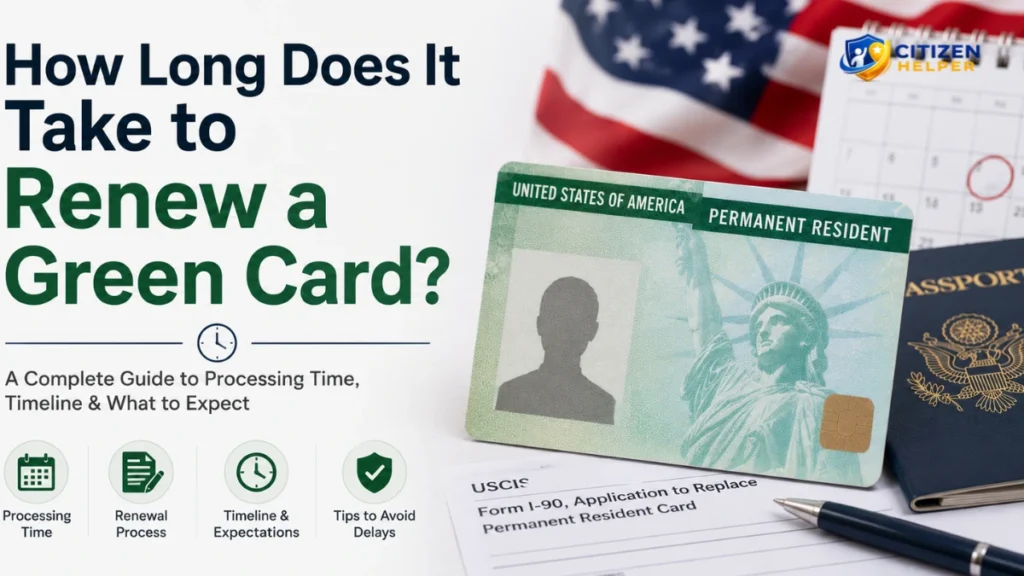
For most permanent residents, renewing a Green Card involves filing Form I-90 with USCIS. After your application is accepted, USCIS reviews your information, performs security and identity checks, and determines whether additional documentation or biometrics are needed before issuing a new card.
There is no single processing time that applies to every applicant. Some renewals move through the system relatively quickly, while others take longer due to workload or individual circumstances.
Several factors can influence your renewal timeline, including:
- Current USCIS processing volumes
- Accuracy and completeness of your application
- Whether USCIS requests additional evidence
- Scheduling of biometrics appointments, if required
- Security and background checks
- Changes in USCIS policies or procedures
Although many applicants receive their renewed Green Card within several months, some cases may take longer. Filing your renewal well before your current Green Card expires is the best way to avoid unnecessary complications.
Official Source: USCIS – Form I-90, Application to Replace Permanent Resident Card
Typical Green Card Renewal Timeline
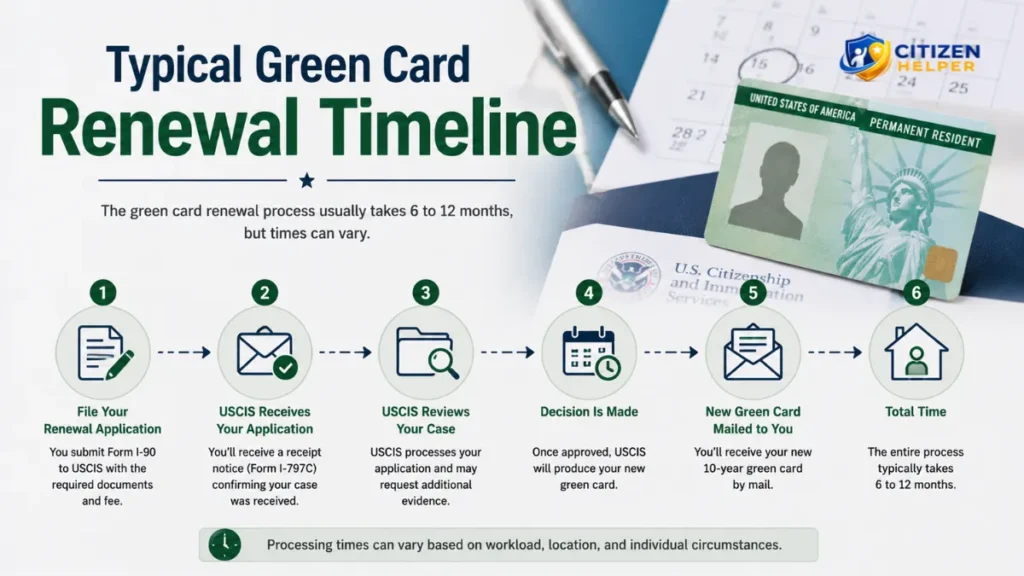
While every application is different, the renewal process generally follows the same sequence of steps.
| Step | What Happens |
| Submit Form I-90 | File your application online or by mail. |
| Receive Receipt Notice | USCIS confirms it has accepted your application. |
| Case Review | USCIS reviews your information and supporting documents. |
| Biometrics (if required) | USCIS may schedule fingerprinting, a photograph, or a signature appointment. |
| Additional Requests (if needed) | USCIS may ask for more evidence before making a decision. |
| Decision | USCIS approves the renewal and produces your new Green Card. |
| Card Delivery | Your new Green Card is mailed to the address on your application. |
Each of these steps can affect the overall timeline. For example, if USCIS requests additional documentation or you miss a biometrics appointment, your application may take longer to process.
How the Green Card Renewal Process Works
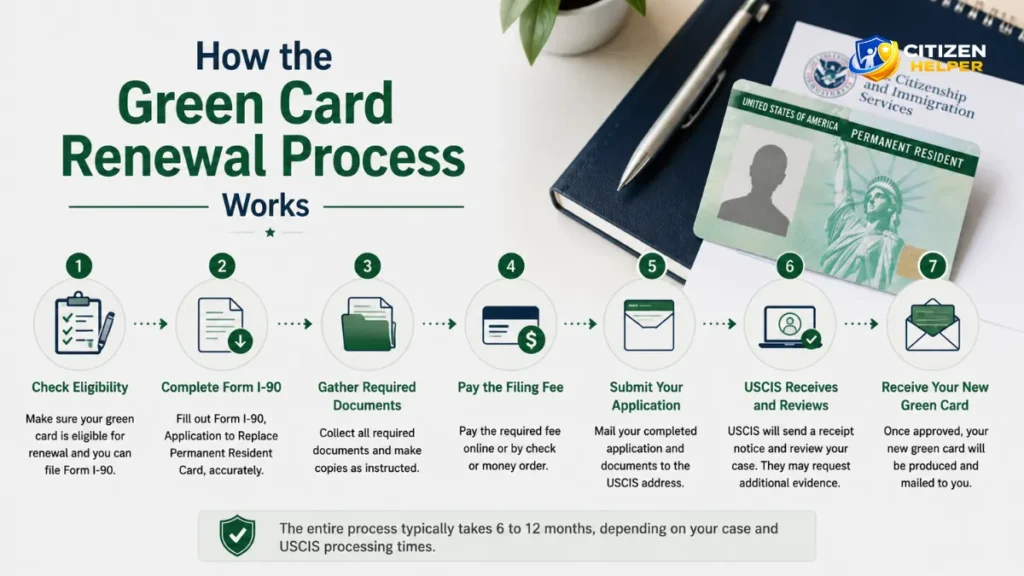
Understanding the renewal process can help you know what to expect after submitting your application.
Step 1: Complete Form I-90
Most permanent residents renew an expiring or expired Green Card by filing Form I-90, either online or by mail. Before submitting the application, carefully review all information to ensure it is accurate and complete.
Common information requested includes:
- Your current Green Card information
- Personal identification details
- Immigration information
- Mailing address
- Supporting documentation, when required
Incomplete applications can lead to delays or requests for additional evidence.
Official Source: USCIS – Form I-90
Step 2: Receive Your Receipt Notice
After USCIS accepts your application, you’ll receive a Form I-797, Notice of Action, commonly called a receipt notice.
This document confirms that USCIS has received your application and begun processing it. Depending on current USCIS policy, the receipt notice may also serve as temporary evidence that extends the validity of your Green Card for a specified period while your renewal is pending.
Keep this notice in a safe place, as you may need it to demonstrate your lawful permanent resident status.
Step 3: Biometrics Appointment (If Required)
USCIS may require you to attend a biometrics appointment.
During this appointment, USCIS may collect:
- Fingerprints
- A photograph
- Your signature
In some situations, USCIS may reuse previously collected biometrics and waive the appointment. Whether a biometrics appointment is necessary depends on your individual case and current USCIS procedures.
Failing to attend a scheduled appointment without following USCIS instructions could delay your application.
Step 4: USCIS Reviews Your Application
Once all required information has been received, USCIS reviews your application.
During this stage, officers may:
- Verify your identity
- Conduct background and security checks
- Review supporting documents
- Confirm your eligibility for renewal
If additional information is needed, USCIS may issue a Request for Evidence (RFE). Responding promptly can help avoid further delays.
Step 5: Receive Your New Green Card
After USCIS approves your application, your new Permanent Resident Card is produced and mailed to the address listed on your application.
When your card arrives:
- Verify that all information is correct.
- Store it in a safe place.
- Update your records if your mailing address changed during the process.
Your renewed Green Card generally has a new expiration date while your lawful permanent resident status itself does not expire simply because the card expires.
Factors That Can Affect Green Card Renewal Processing Time
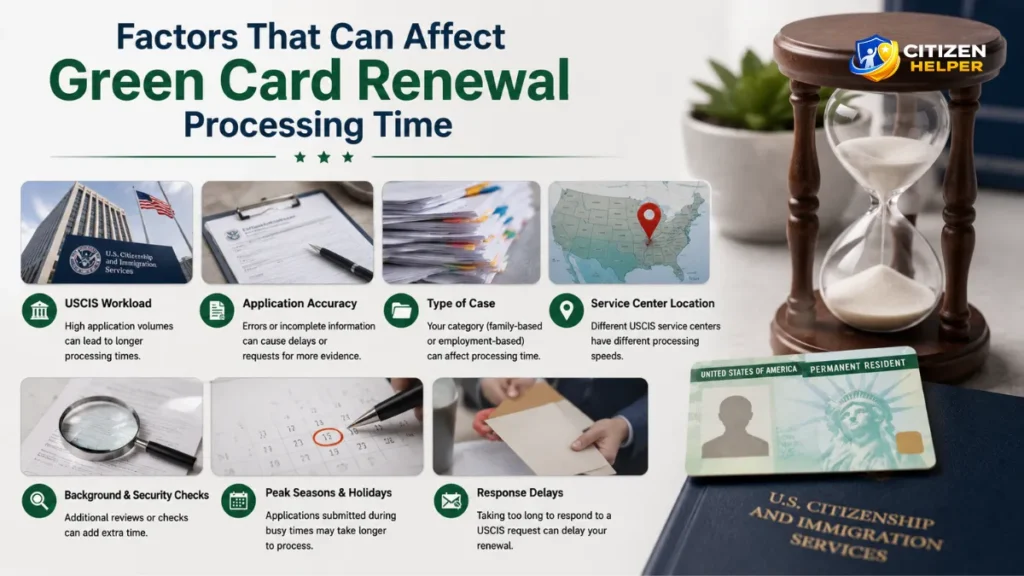
Although many Green Card renewal applications follow a similar process, some are completed more quickly than others. Several factors can influence how long USCIS takes to process your application.
High Application Volume
USCIS receives thousands of immigration applications every month. During periods of high demand, Green Card renewal applications may take longer to review and approve.
Incomplete Applications
Missing information, unsigned forms, or incorrect supporting documents can delay your case. USCIS may issue a Request for Evidence (RFE) if additional documentation is needed.
Before submitting Form I-90, carefully review every section to ensure your application is complete and accurate.
Background and Security Checks
USCIS conducts identity verification and security screenings as part of the renewal process. Most applicants complete this step without issues, but additional review may extend the processing timeline in some cases.
Biometrics Scheduling
If USCIS requires new fingerprints or photographs, you’ll need to attend a biometrics appointment. Scheduling availability at your local Application Support Center may affect your overall processing time.
Official Source: USCIS – Form I-90
Can You Travel While Waiting for Your Green Card Renewal?

Many permanent residents worry about international travel after submitting a Green Card renewal application.
In many cases, USCIS issues a receipt notice that extends the validity of an expired Green Card for a specified period while the renewal is pending. This extension may help demonstrate your continued lawful permanent resident status.
However, before making international travel plans, you should ensure you have the documentation required for reentry into the United States.
Depending on your circumstances, you may need:
- Your expired Green Card
- Your USCIS receipt notice
- A valid passport from your country of citizenship
- Any additional documentation requested by immigration officials
Because travel requirements can change, always verify the latest USCIS guidance before leaving the United States.
Official Source: USCIS – Green Card
What Happens If Your Green Card Expires Before the New One Arrives?
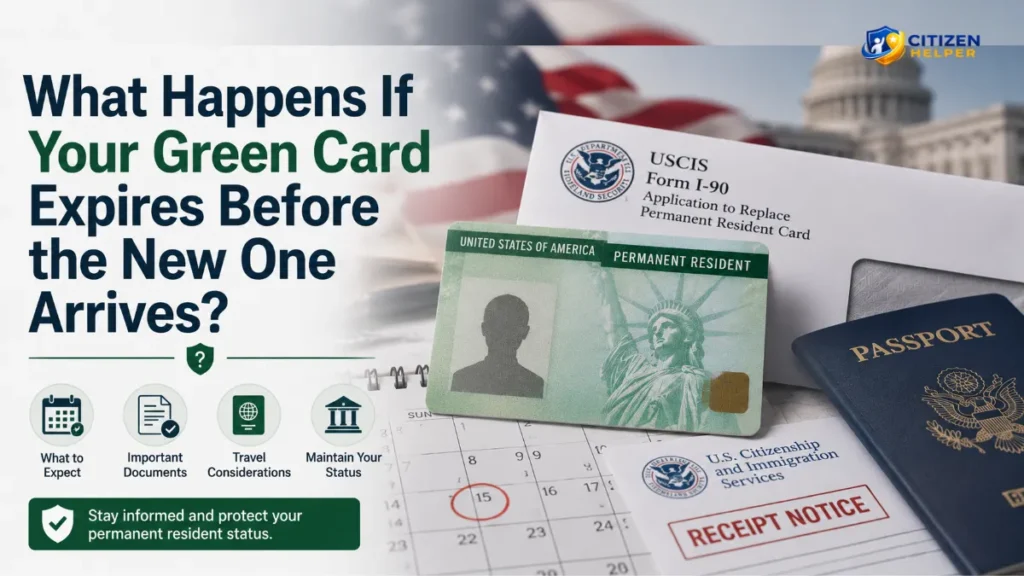
An expired Green Card does not automatically mean you lose your lawful permanent resident status.
Instead, the expired card simply means your proof of permanent residence has expired.
If you filed Form I-90 before or after your card expired, USCIS may provide documentation showing that your status remains valid while your renewal application is pending.
Even so, it’s best to renew your Green Card before it expires whenever possible. Doing so can help avoid difficulties when:
- Applying for a job
- Returning from international travel
- Updating identification documents
- Completing employment verification
How to Check Your Green Card Renewal Status
After filing Form I-90, you can monitor your application online.
Your receipt notice includes a receipt number that allows you to check your case status through the USCIS website.
You’ll generally be able to see updates such as:
- Application received
- Biometrics scheduled
- Case under review
- Request for Evidence issued
- Card being produced
- Card mailed
If your mailing address changes while your application is pending, notify USCIS as soon as possible to prevent delivery issues.
Official Source: USCIS – Case Status Online
What Should You Do If Your Green Card Renewal Is Taking Too Long?
If your application has been pending longer than the normal USCIS processing time, there are several steps you can take.
Review Current Processing Times
Processing times vary throughout the year. Compare your case with the latest estimates published by USCIS.
Check Your Case Status
Log in to your USCIS account or use your receipt number to determine whether your application requires additional action.
Respond Quickly to USCIS Requests
If USCIS sends a Request for Evidence or schedules a biometrics appointment, respond as soon as possible.
Contact USCIS
If your application appears significantly delayed beyond normal processing times, you may be able to submit an inquiry through USCIS.
Official Source: USCIS – Check Processing Times
Common Mistakes That Can Delay Green Card Renewal
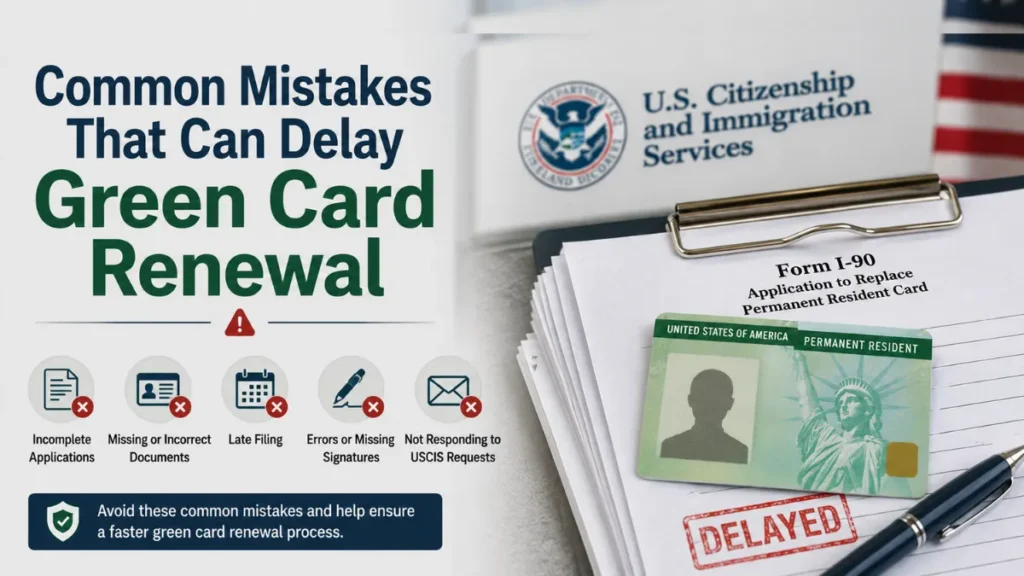
Avoiding common errors can help your application move through the system more efficiently.
Some of the most common mistakes include:
- Filing the wrong form
- Forgetting to sign the application
- Providing outdated personal information
- Missing supporting documents
- Failing to update your address after moving
- Missing a biometrics appointment
- Ignoring USCIS notices
Taking time to carefully review your application before submission can reduce the likelihood of delays.
Conclusion:
If you’re wondering how long does it take to renew a Green Card, the answer depends on your individual circumstances and current USCIS processing times. While many applicants receive their new Green Card within several months, others may experience longer wait times due to application volume, security checks, biometrics appointments, or requests for additional information.
The best way to avoid unnecessary delays is to submit a complete and accurate Form I-90, respond promptly to any USCIS requests, and monitor your application online. Renewing your Green Card before it expires can also help prevent complications with travel, employment, and proving your permanent resident status.
Because immigration policies and processing times may change, always verify the latest information directly with USCIS before making important decisions.
Frequently Asked Questions (FAQ)
Can I renew my Green Card before it expires?
Yes. USCIS generally recommends renewing a Green Card before it expires to avoid issues with employment, travel, or identification.
Does an expired Green Card mean I lose permanent resident status?
No. An expired Green Card does not automatically end your lawful permanent resident status. It simply means the card itself has expired.
Can I work while waiting for my renewed Green Card?
Many employers may accept documentation showing your continued authorization, depending on your circumstances and current employment verification requirements.
How can I check my Green Card renewal application?
You can check your case online using the receipt number provided by USCIS after filing Form I-90.
Can I speed up my Green Card renewal?
USCIS generally processes applications in the order they are received. Expedited processing is not available for most Green Card renewal applications.