If you’ve heard that Medicare will require prior approval for certain procedures, you may be wondering whether this change affects your healthcare coverage. The answer depends on the type of Medicare you have, where you receive care, and the procedure involved.
Beginning in 2026, the Centers for Medicare & Medicaid Services (CMS) launched a new demonstration called the Wasteful and Inappropriate Service Reduction (WISeR) Model. The model introduces prior authorization or pre-payment medical review for a limited group of services under Original Medicare in selected states. It is designed to reduce fraud, waste, and medically unnecessary care while preserving access to medically appropriate treatment.
In this guide, you’ll learn what prior authorization means, who is affected, which states are participating, and what these changes could mean for Medicare beneficiaries.
Quick Answer
Yes, Medicare will require prior approval for certain procedures in some situations—but not for all beneficiaries nationwide.
Currently:
- The change applies only to a CMS demonstration model in selected states.
- It affects certain services covered under Original Medicare.
- It does not apply nationwide to every Medicare-covered procedure.
- It does not change Medicare’s coverage rules or your right to appeal coverage decisions.
Is Medicare Requiring Prior Approval for Certain Procedures?
Historically, Original Medicare required very little prior authorization compared with Medicare Advantage plans.
That is changing in limited areas through the CMS WISeR Model, which began in 2026. Under this demonstration, providers furnishing certain selected services in participating states have two options:
- Submit a prior authorization request before providing the service, or
- Skip prior authorization and have the claim undergo pre-payment medical review before Medicare pays it.
CMS says the model is intended to:
- Reduce unnecessary or low-value medical services.
- Help prevent fraud, waste, and abuse.
- Speed up review decisions through improved technology.
- Ensure Medicare pays only for services that meet existing coverage requirements.
Importantly, the model does not create new Medicare coverage rules. Instead, it reviews whether selected services already meet Medicare’s existing medical necessity requirements.
Official Source: Centers for Medicare & Medicaid Services – WISeR Model
What Is Prior Authorization?

Prior authorization (also called prior approval or preauthorization) is a process that requires a healthcare provider to obtain approval before performing certain medical services or procedures.
The purpose is to confirm that:
- The service meets Medicare’s coverage requirements.
- The treatment is medically necessary.
- Required clinical documentation has been provided.
If prior authorization is approved, the provider can generally proceed knowing Medicare has reviewed the request under the applicable coverage criteria.
If a request is not approved, providers and beneficiaries still have rights under Medicare’s existing appeals process. The WISeR model does not eliminate those protections.
Although prior authorization is common in many private insurance plans and Medicare Advantage plans, it has historically been much less common under Original Medicare.
Which Medicare Beneficiaries Are Affected?
Not every Medicare beneficiary is affected by the new model.
The WISeR Model currently applies only to:
- People enrolled in Original Medicare (fee-for-service Medicare).
- Selected outpatient items and services included in the model.
- Healthcare providers located in participating states.
The model does not apply to:
- Most Original Medicare beneficiaries outside participating states.
- Emergency medical services.
- Inpatient-only procedures.
- Time-sensitive services excluded from the model.
- People enrolled in Medicare Advantage, which already has its own prior authorization rules.
This distinction is important because many news headlines suggest that all Medicare beneficiaries will need prior approval for procedures. At this time, that is not the case.
Which States Are Included?
For the initial performance period, the WISeR Model operates in six states:
- Arizona
- New Jersey
- Ohio
- Oklahoma
- Texas
- Washington
The model began on January 1, 2026, with prior authorization requests accepted beginning January 5, 2026 for covered services provided on or after January 15, 2026. CMS plans to evaluate the model through December 31, 2031 before deciding whether broader implementation is appropriate.
If you receive care outside these participating states, the WISeR prior authorization model generally does not apply to your provider under the current demonstration.
Which Procedures Require Prior Approval?
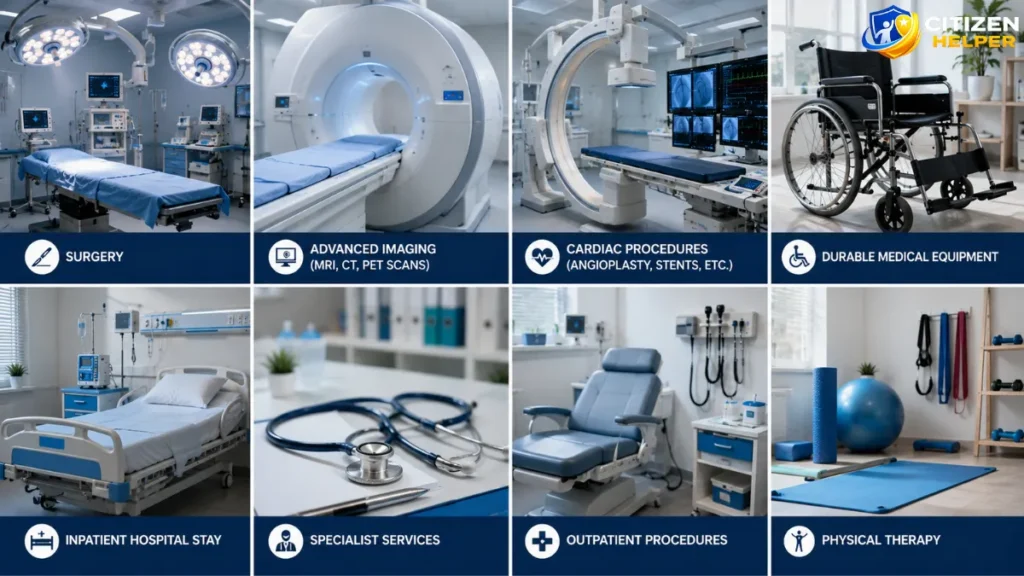
A common misconception is that Medicare now requires prior authorization for every surgery or medical procedure. That is not true.
Under the WISeR Model, prior authorization applies only to specific outpatient items and services selected by CMS for the demonstration.
Rather than creating a new list of covered procedures, CMS focuses on services that have historically shown a higher risk of:
- Improper payments
- Fraud or abuse
- Overuse
- Medical necessity concerns
The exact services included in the model are identified by CMS and may be updated during the demonstration. Healthcare providers participating in the model are responsible for determining whether a planned service requires prior authorization.
If you’re unsure whether your procedure is included, ask your healthcare provider before treatment.
How the Prior Authorization Process Works
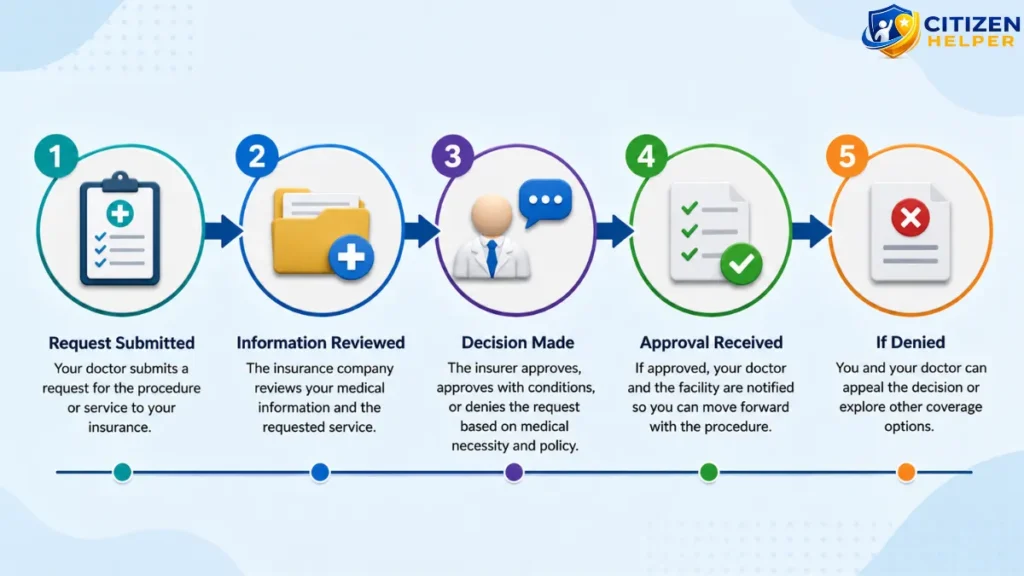
If a planned service falls within the WISeR Model, your healthcare provider generally begins the prior authorization process.
The process typically works like this:
- Your provider determines whether the planned service is included in the WISeR Model.
- The provider submits the required medical documentation.
- The reviewer evaluates whether the service meets Medicare’s existing coverage and medical necessity requirements.
- A determination is issued.
- If approved, the provider can generally proceed with the service.
Under the model, providers may also choose to skip prior authorization and instead have the claim undergo a pre-payment medical review before Medicare pays the claim.
Beneficiaries generally are not expected to complete the prior authorization request themselves. The provider typically handles the submission and supporting documentation.
CMS has stated that the model is designed to encourage faster, more consistent reviews while continuing to follow Medicare’s existing coverage policies.
What Happens if Prior Authorization Is Denied?
A denial of prior authorization does not automatically mean you can never receive the service.
If a request is denied, your provider may:
- Review the reason for the denial.
- Submit additional medical documentation if appropriate.
- Request a new review when permitted.
- Use Medicare’s established appeals process if applicable.
CMS has emphasized that beneficiaries continue to have the same appeal rights available under Medicare rules.
In some cases, a denial may result from incomplete documentation rather than the medical service itself. Your healthcare provider can explain whether additional information may help support the request.
If you receive a notice about a denial and do not understand it, contact your provider or Medicare for clarification before making treatment decisions.
Does This Apply to Medicare Advantage?

No. The WISeR Model is separate from Medicare Advantage prior authorization rules.
Many Medicare Advantage (Part C) plans have long required prior authorization for certain services under their own plan rules.
The WISeR Model applies only to Original Medicare in participating states and should not be confused with Medicare Advantage requirements.
Here’s a simple comparison:
| Original Medicare (WISeR Model) | Medicare Advantage |
| Limited demonstration in selected states | Available nationwide through private plans |
| Applies only to selected services in the model | Prior authorization rules vary by plan |
| Uses Medicare’s existing coverage requirements | Follows Medicare rules plus individual plan requirements |
If you have Medicare Advantage, continue following your plan’s prior authorization requirements. The WISeR Model does not replace or change those plan-specific rules.
Why Is CMS Making This Change?
CMS created the WISeR Model to test whether prior authorization and pre-payment review can improve the Medicare program without reducing access to medically necessary care.
According to CMS, the goals include:
- Reducing fraud, waste, and abuse.
- Limiting medically unnecessary services.
- Improving program integrity.
- Encouraging faster and more consistent coverage decisions.
- Protecting Medicare funds while preserving access to appropriate care.
CMS has also stated that the model does not change Medicare’s coverage standards. Providers must continue to meet the same medical necessity and documentation requirements that already exist under Original Medicare.
The agency will evaluate the demonstration over several years to determine whether it improves care quality, reduces unnecessary spending, and maintains beneficiary access to needed services before considering any future expansion.
How to Prepare if You’re Affected
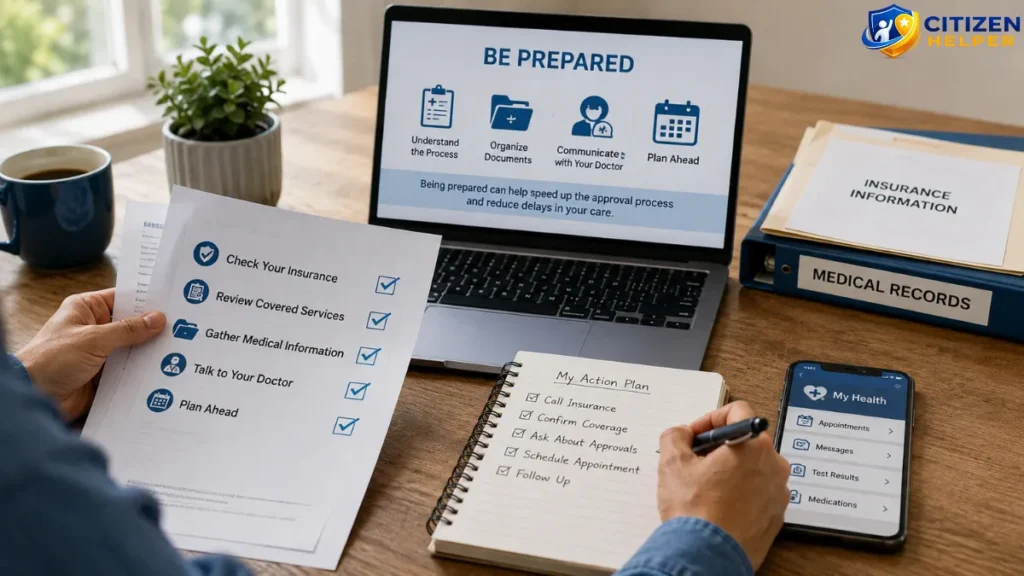
If you receive care in one of the WISeR Model states, taking a few simple steps before your procedure may help avoid unexpected delays.
Consider asking your healthcare provider:
- Is my procedure included in the WISeR Model?
- Will prior authorization be requested?
- Has all required medical documentation been submitted?
- How long is the review expected to take?
- What happens if additional information is requested?
You should also:
- Keep copies of important Medicare notices.
- Review any communications from your provider.
- Ask questions if you receive a denial or request for more information.
- Verify your Medicare coverage before scheduling non-emergency procedures.
Remember that your provider generally handles the prior authorization process, but staying informed can help you understand what to expect.
Common Mistakes to Avoid
The recent Medicare changes have generated many headlines, leading to confusion about who is affected. Avoid these common misunderstandings.
Thinking Every Medicare Procedure Requires Prior Approval
This is one of the biggest misconceptions.
The WISeR Model applies only to selected outpatient services in participating states. Most Medicare-covered services continue to follow existing coverage and payment rules.
Assuming the Change Applies Nationwide
The demonstration currently operates only in:
- Arizona
- New Jersey
- Ohio
- Oklahoma
- Texas
- Washington
If your provider is outside these states, the WISeR Model generally does not apply under the current demonstration.
Confusing Original Medicare With Medicare Advantage
Many Medicare Advantage plans have required prior authorization for years.
The WISeR Model affects certain services under Original Medicare, making it a separate initiative from Medicare Advantage plan requirements.
Waiting Until the Day of Your Procedure
If your provider believes a planned service is subject to the WISeR Model, addressing prior authorization before the scheduled procedure can help reduce delays.
Ignoring a Denial Notice
If prior authorization is denied, review the notice carefully.
Your provider may be able to submit additional documentation or pursue Medicare’s established appeal process when appropriate.
Conclusion:
If you’ve heard that Medicare will require prior approval for certain procedures, it’s important to understand what has actually changed.
The new WISeR Model is a limited CMS demonstration that applies only to selected outpatient services under Original Medicare in six participating states. It does not create a nationwide prior authorization requirement for all Medicare beneficiaries, nor does it change Medicare’s existing coverage standards.
If you live in a participating state, talk with your healthcare provider before scheduling a procedure to determine whether the model applies to your planned treatment. Your provider can explain whether prior authorization is needed, help submit the required documentation, and guide you through the review process if necessary.
Because CMS may update the model over time, always verify the latest information through official Medicare or CMS resources before making healthcare decisions.
Frequently Asked Questions (FAQ)
Is Medicare now requiring prior authorization for all procedures?
No. The WISeR Model applies only to selected outpatient services in participating states. It does not require prior authorization for every Medicare-covered procedure.
Which states are participating in the WISeR Model?
As of the current CMS implementation, the participating states are:
Arizona
New Jersey
Ohio
Oklahoma
Texas
Washington
CMS may update or expand the model in the future.
Does this affect Medicare Advantage plans?
No. Medicare Advantage plans already have their own prior authorization rules. The WISeR Model is a separate demonstration for certain services under Original Medicare.
Who submits the prior authorization request?
In most cases, your healthcare provider submits the prior authorization request and supporting medical documentation.
What if prior authorization is denied?
A denial does not necessarily mean you cannot receive the service. Your provider may submit additional documentation, request another review when appropriate, or use Medicare’s existing appeals process.
Will emergency care require prior authorization?
Generally, no. Emergency services are not part of the WISeR Model’s prior authorization process.