Section 8 income limits help determine whether a household may qualify for rental assistance through the Housing Choice Voucher Program. The program is funded by the U.S. Department of Housing and Urban Development (HUD) and administered by local public housing agencies (PHAs).
There is no single nationwide income limit for Section 8. Your eligibility may depend on where you live, your household size, the local median income, and the current HUD limits for your area. In general, the program serves low-income, very low-income, and extremely low-income households, but meeting an income limit does not guarantee that you will receive a voucher.
This guide explains how Section 8 income limits work, how HUD calculates them, what income may count, and how to check the current limit for your household.
Quick Answer: What Is the Income Limit for Section 8?
Section 8 income limits vary by location and household size. HUD generally sets income limits using the median family income for a local area and updates the limits periodically.
For Housing Choice Voucher eligibility, households generally must have income that does not exceed the limit used by the local housing agency. Federal rules also require public housing agencies to direct most new voucher admissions to households with extremely low incomes.
Because limits differ across counties and metropolitan areas, you should check the current HUD income limits for the location where you plan to apply.
Official Source: U.S. Department of Housing and Urban Development – Housing Choice Voucher Program Guidebook
What Are Section 8 Income Limits?

Section 8 income limits are income thresholds used to help determine eligibility for the Housing Choice Voucher Program.
HUD develops income limits for different locations and household sizes. Local public housing agencies use these limits when reviewing applications.
The limits are not based only on the federal poverty level. Instead, HUD generally considers local median family income and applies federal income-limit rules and adjustments.
This means a household may be within the Section 8 income limit in one area but above the applicable limit in another area.
Section 8 income limits may differ based on:
- State
- County
- Metropolitan area
- Household size
- Local median family income
- Current HUD adjustments
Income limits may change when HUD publishes updated figures. Always verify the current limit before applying.
Official Source: U.S. Department of Housing and Urban Development – Income Limits
Section 8 Income Categories Explained
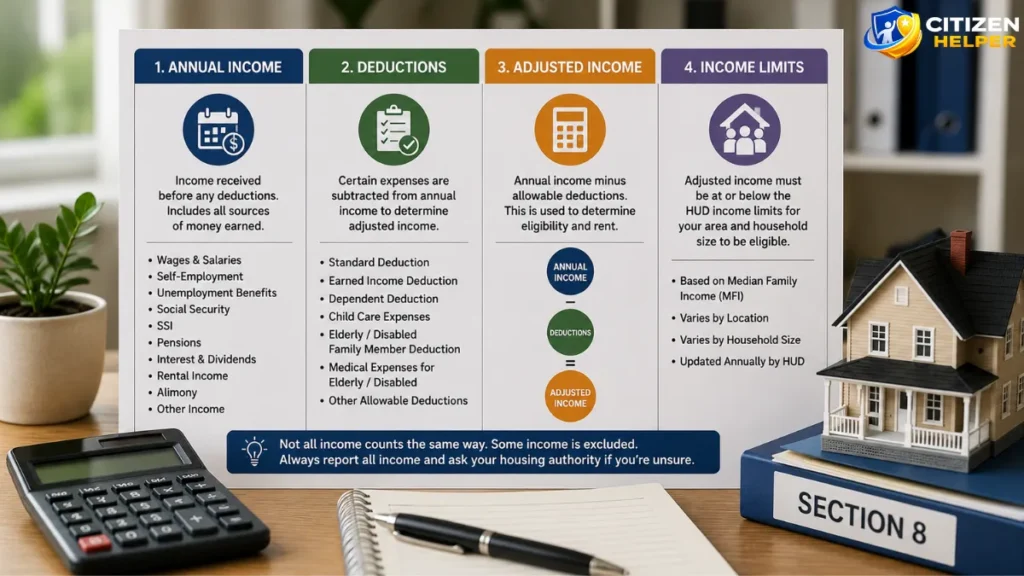
HUD uses several income categories in federal housing programs. Understanding these categories can help explain how housing agencies determine eligibility and prioritize applicants.
Low-Income Families
A low-income family generally has an income that does not exceed 80% of the area median income (AMI), subject to HUD adjustments.
Some households within this category may qualify for the Housing Choice Voucher Program, depending on federal rules and local housing agency policies.
Very Low-Income Families
A very low-income family generally has an income that does not exceed 50% of the area median income.
In general, a household must be very low income to qualify for the Housing Choice Voucher Program unless another eligibility category or exception applies.
Extremely Low-Income Families
An extremely low-income family generally has income at or below the higher of:
- The federal poverty guideline for the applicable household size, or
- 30% of the area median income
The amount is subject to federal rules and HUD adjustments.
Federal targeting requirements generally require public housing agencies to ensure that at least 75% of families admitted to the Housing Choice Voucher Program during a public housing agency’s fiscal year are extremely low-income families.
This requirement affects how agencies select applicants but does not guarantee that every extremely low-income applicant will receive immediate assistance.
Official Source: U.S. Department of Housing and Urban Development – Housing Choice Voucher Program Eligibility
How Does HUD Calculate Section 8 Income Limits?
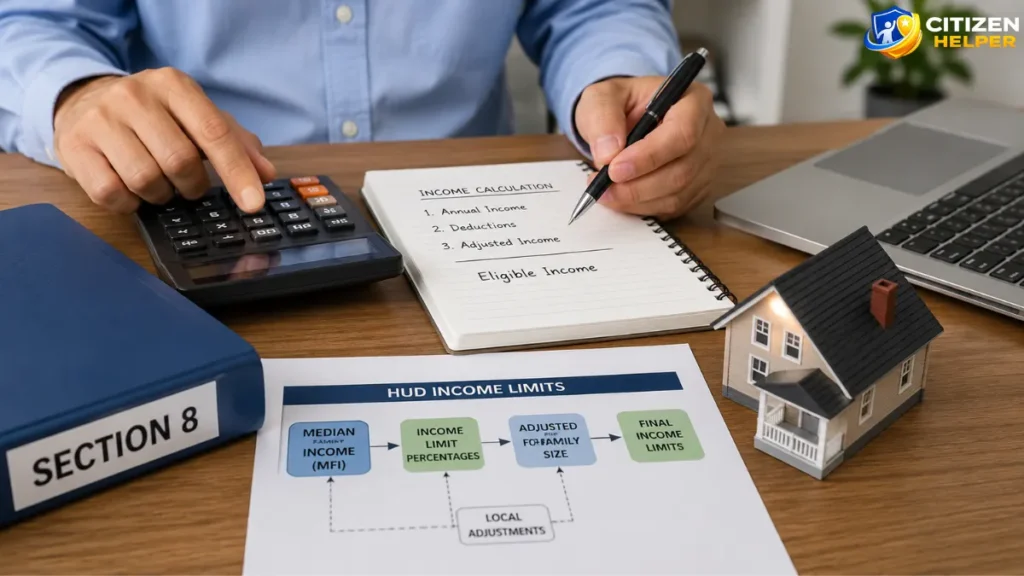
HUD calculates income limits using local income data and federal program rules.
The process generally considers:
- Area median family income
- Household size
- Local housing market conditions
- Federal income-limit requirements
- Adjustments designed to prevent unusually large changes
HUD publishes income limits for different household sizes, commonly ranging from one-person households to eight-person households. Additional calculations may apply to larger households.
The limits are adjusted because a larger household generally has a higher income threshold than a smaller household in the same area.
For example, the applicable income limit for a four-person household is generally higher than the limit for a one-person household. However, the exact amounts depend on the current HUD income-limit table for the area.
Why Section 8 Income Limits Vary by Location
Housing costs and income levels differ significantly across the United States. For this reason, Section 8 does not use one income limit for the entire country.
HUD may publish different income limits for:
- High-cost metropolitan areas
- Lower-cost counties
- Rural communities
- Different areas within the same state
A household earning the same annual income could be eligible in one location but exceed the income limit in another.
When checking eligibility, use the income limit for the housing agency and area where you plan to apply. Do not rely on a general statewide average unless the housing agency specifically uses that figure.
Section 8 Income Limits by Household Size
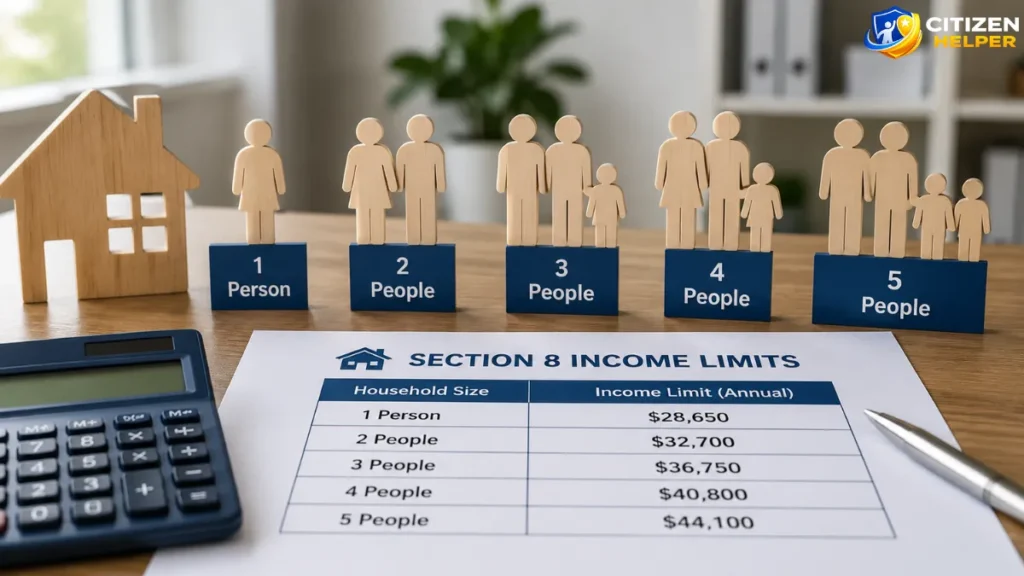
Section 8 income limits generally increase as household size increases.
HUD income-limit tables typically provide separate limits for households with:
- 1 person
- 2 people
- 3 people
- 4 people
- 5 people
- 6 people
- 7 people
- 8 people
The housing agency determines which household members are included when calculating family size and income.
Household composition may include eligible family members who will live in the assisted unit. However, specific rules may apply to temporarily absent family members, live-in aides, unborn children, foster children, and other household circumstances.
Do not assume that every person associated with the household will be treated the same way for income or household-size calculations. Provide accurate information and allow the housing agency to apply the appropriate rules.
How to Check the Current Section 8 Income Limits
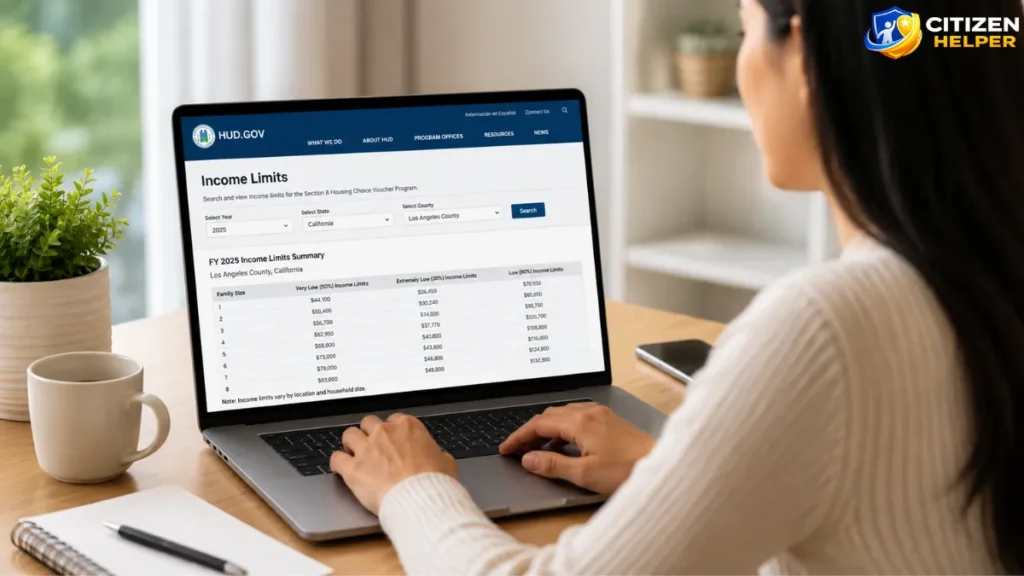
Because Section 8 income limits vary by location and may change, use HUD’s official income-limit resources or contact the local housing agency.
You can generally follow these steps:
- Open HUD’s official income-limit website.
- Select the current income-limit year.
- Search by state, county, metropolitan area, or other requested location.
- Find the appropriate income category.
- Locate the limit for your household size.
- Confirm the information with the public housing agency where you plan to apply.
The local housing agency makes the final eligibility determination.
Official Source: U.S. Department of Housing and Urban Development – Income Limits Documentation System
What Income Counts for Section 8?

A public housing agency generally reviews income expected to be received by household members during the applicable period.
Depending on federal rules and household circumstances, countable income may include:
- Wages and salaries
- Overtime pay
- Tips, bonuses, and commissions
- Net income from a business or self-employment
- Social Security benefits
- Supplemental Security Income (SSI)
- Retirement and pension income
- Unemployment compensation
- Workers’ compensation
- Certain recurring payments
- Income from assets in some circumstances
Not every payment is necessarily counted. Federal rules include exclusions and special treatment for certain types of income.
Applicants should report all requested income and allow the housing agency to determine what must be included.
Does Social Security Count as Income for Section 8?
Social Security benefits are generally included when a housing agency calculates annual income, although federal rules may exclude certain payments or adjustments.
Benefits that may require review include:
- Social Security retirement benefits
- Social Security Disability Insurance (SSDI)
- Supplemental Security Income (SSI)
- Survivor benefits
The housing agency may request current benefit verification, such as an official benefit letter.
Do not subtract expenses or exclude part of a benefit unless the housing agency instructs you to do so.
Does SSI Count as Income for Section 8?
Supplemental Security Income is generally considered when calculating household income for HUD rental assistance.
However, income calculations can involve exclusions, deductions, and program-specific rules. The housing agency will determine how the benefit affects eligibility and the household’s rent calculation.
Provide current and accurate benefit information when requested.
Does SSDI Count as Income for Section 8?
Social Security Disability Insurance is generally included in annual income for Section 8 eligibility and rent calculations.
Receiving SSDI does not automatically make someone ineligible. Eligibility depends on total household income, household size, the applicable local income limit, and other program requirements.
A person receiving SSDI may still qualify if the household meets the applicable rules.
Does Employment Income Count for Section 8?
Wages and other employment earnings generally count when determining Section 8 eligibility.
Employment income may include:
- Regular wages
- Salary
- Overtime
- Tips
- Commissions
- Bonuses
- Other compensation
Housing agencies may verify employment through documents or other authorized methods.
Report employment income accurately, even if your hours or earnings change from week to week.
Does Self-Employment Income Count for Section 8?
Net income from self-employment or a business may be included in the Section 8 income calculation.
The housing agency may request documents such as:
- Tax returns
- Profit-and-loss statements
- Business records
- Bank statements
- Income and expense documentation
Self-employed applicants should not report only gross business revenue unless instructed to do so. The housing agency applies HUD rules to determine the amount of countable net income.
Does Child Support Count as Income for Section 8?
Child support payments may be included in annual income when they are received by the household.
The housing agency may ask for information about:
- Court-ordered child support
- Payments actually received
- Payment history
- Efforts to collect unpaid support, when relevant
Rules may differ when payments are irregular, unpaid, or unlikely to continue.
Provide accurate records and allow the housing agency to determine the amount that should be counted.
Does Unemployment Count as Income for Section 8?
Unemployment compensation is generally considered income for Section 8 purposes.
The housing agency may review:
- The current benefit amount
- How often payments are received
- The expected duration of benefits
- Other household income
Temporary income may still need to be reported.
What Income Is Excluded From Section 8?

Federal rules exclude certain types of income from HUD annual-income calculations.
Depending on current regulations and individual circumstances, exclusions may apply to certain:
- Nonrecurring income, including certain one-time payments that are not expected to repeat in the coming year
- Income earned by children under age 18
- Payments received for the care of foster children or foster adults
- Certain student financial assistance
- Amounts received to reimburse or cover eligible health and medical care expenses
- Certain amounts received by or on behalf of a person with a disability to help the person live independently
- Certain payments from federal, state, local, or Tribal programs
- Certain payments specifically excluded from income by federal law
- Certain other income excluded under HUD regulations
The current regulations do not use the older general phrase “temporary, nonrecurring, or sporadic income.” Instead, they exclude specific types of nonrecurring income. Examples may include certain one-time payments resulting from the settlement of claims, insurance payments, inheritances, and other qualifying amounts that will not be repeated during the coming year.
Gifts are addressed separately under the current regulations. Nonmonetary, in-kind donations to the household, such as food or clothing, are excluded from annual income. However, recurring monetary gifts or contributions may generally be counted. Only nonrecurring monetary gifts, such as contributions for significant life events or emergencies, may qualify for exclusion.
Some income exclusions are limited or depend on specific conditions. Applicants should report all income, payments, gifts, benefits, and financial assistance requested by the public housing agency rather than deciding on their own that an amount is excluded. The housing agency will determine how current HUD rules apply to the household’s circumstances.
Official Source: Electronic Code of Federal Regulations – 24 CFR § 5.609, Annual Income
What Is the Difference Between Gross Income and Adjusted Income?
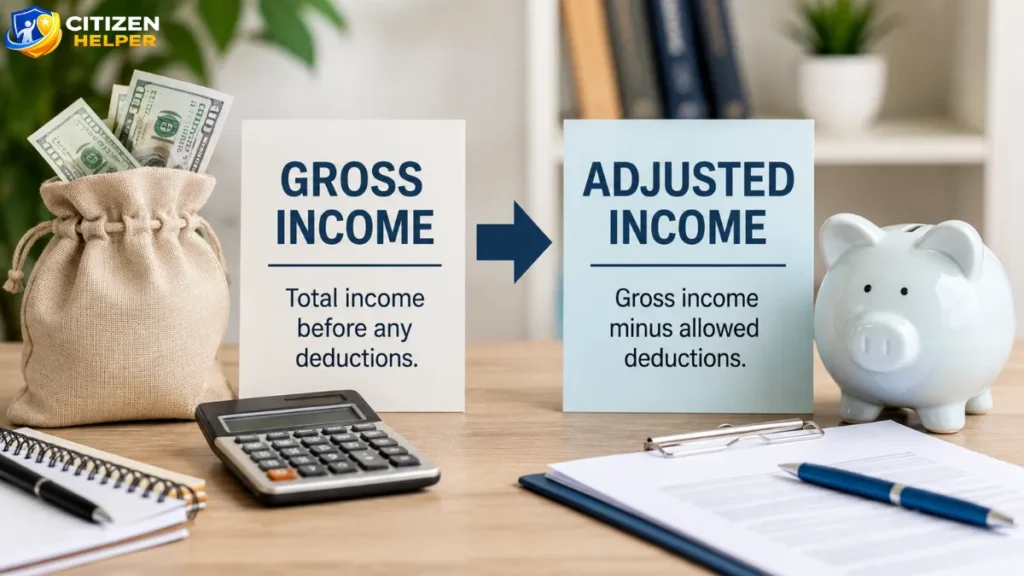
Gross income and adjusted income serve different purposes in the Section 8 program.
Annual Income
Annual income generally refers to the household’s countable income before applicable deductions.
Housing agencies use annual income when determining whether a household meets the applicable income limit.
Adjusted Income
Adjusted income is generally calculated after subtracting eligible deductions from annual income.
Depending on household circumstances and current program rules, deductions may relate to:
- Elderly or disabled family status
- Dependents
- Certain unreimbursed medical expenses
- Certain disability assistance expenses
- Eligible child care expenses
Adjusted income is commonly used when calculating the household’s required contribution toward housing costs.
Not every household qualifies for every deduction.
Do Assets Count Toward Section 8 Income Limits?

Owning an asset is not always the same as receiving income.
Housing agencies may review assets such as:
- Savings accounts
- Checking accounts
- Stocks and bonds
- Investment accounts
- Real estate
- Trusts
- Retirement accounts
- Other financial resources
Income generated by assets may be included in annual income. Current HUD rules may also affect how certain assets and imputed income are treated.
Applicants may be required to report assets even when the assets produce little or no income.
Can You Qualify for Section 8 With No Income?

A household may be eligible for Section 8 even if it currently has no income, provided it meets the program’s other requirements.
The housing agency may ask how the household pays for basic expenses such as:
- Food
- Transportation
- Utilities
- Phone service
- Personal expenses
The agency may also require periodic income reviews or certifications.
Having no income does not guarantee approval or immediate assistance.
Can You Qualify if Your Income Is Above the Limit?
In general, a household must meet the applicable income requirements at admission.
Some federal exceptions may apply to specific households or program circumstances, but applicants should not assume they qualify if their income exceeds the published limit.
The local housing agency makes the final determination based on current rules and verified household information.
What Happens if Your Income Increases After You Get Section 8?
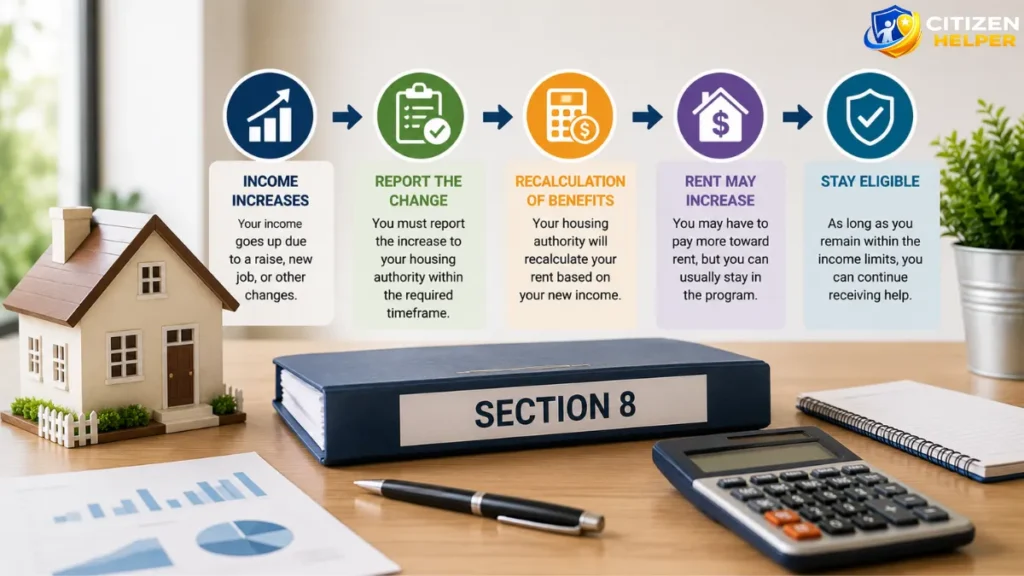
An increase in income does not always mean that assistance ends immediately.
Depending on the amount of the increase and program rules:
- The tenant’s required payment may increase
- The housing assistance payment may decrease
- The household may remain eligible
- Assistance may eventually end if the household no longer needs a subsidy
Participants must report income changes according to the housing agency’s policies.
Failing to report required income changes may result in repayment obligations, termination of assistance, or other program consequences.
What Happens if Your Income Decreases?
If household income decreases, contact the housing agency and follow its reporting procedures.
The agency may review the change and recalculate the household’s required payment when appropriate.
You may be asked to provide documents showing:
- Job loss
- Reduced work hours
- Lower wages
- Loss of benefits
- Other changes in household income
Do not stop paying your current required rent amount unless the housing agency officially changes it.
How Often Does Section 8 Verify Income?
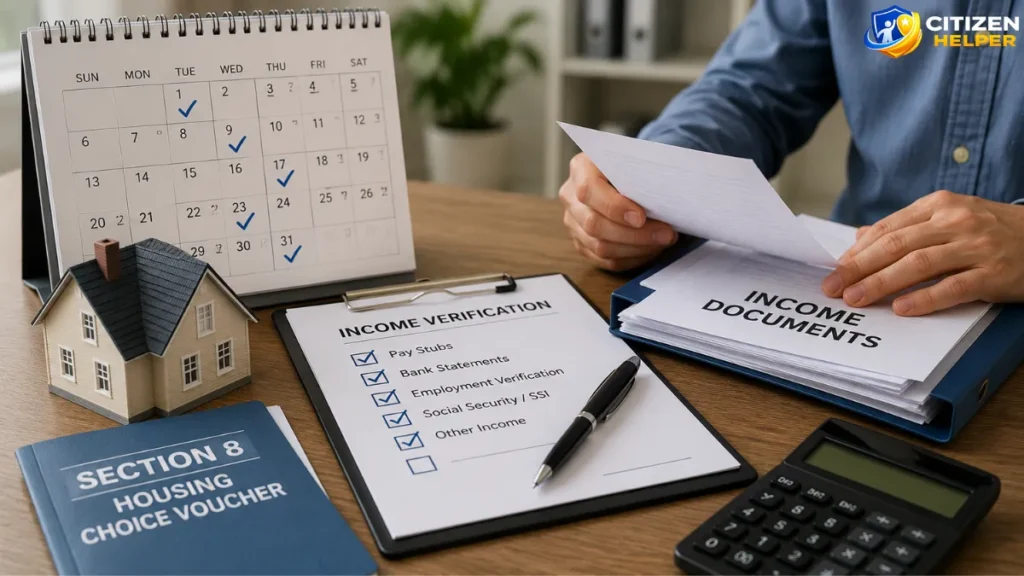
Housing agencies generally review household income and eligibility at required reexaminations. Reviews may also occur when household income or family circumstances change.
The timing and reporting requirements may depend on current HUD rules and the housing agency’s policies.
During an income review, you may need to provide:
- Pay stubs
- Benefit letters
- Tax records
- Bank or asset information
- Employment verification
- Other income documents
Respond to requests by the stated deadline to avoid delays or problems with assistance.
What Documents May Be Needed to Verify Income?
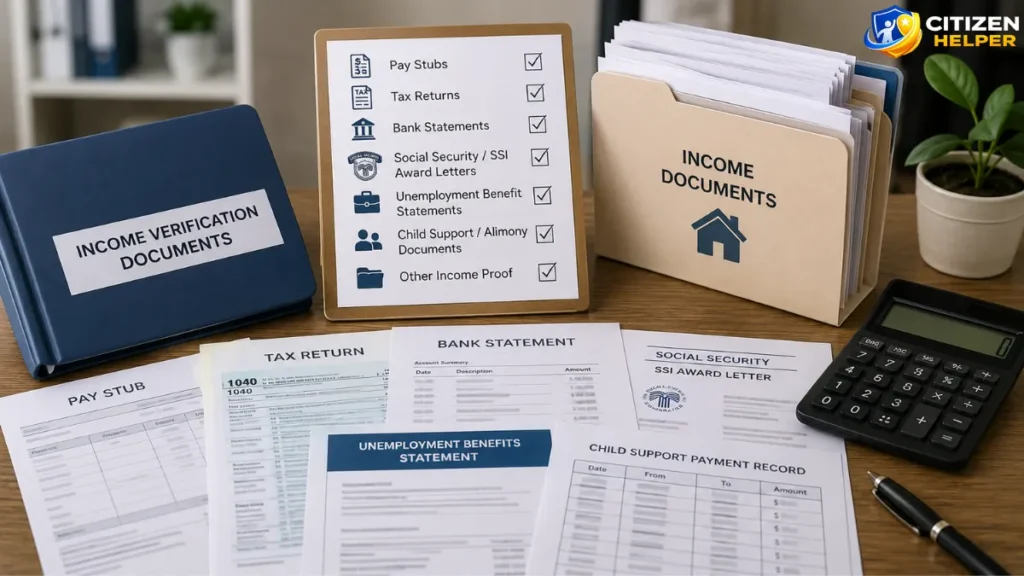
The housing agency may request documents based on the type of income received.
Common documents include:
- Recent pay stubs
- Employer verification
- Social Security benefit letters
- SSI or SSDI verification
- Pension statements
- Unemployment benefit records
- Child support records
- Tax returns
- Self-employment records
- Bank statements
- Asset statements
The exact documents vary by housing agency and household circumstances.
Common Mistakes When Reporting Section 8 Income
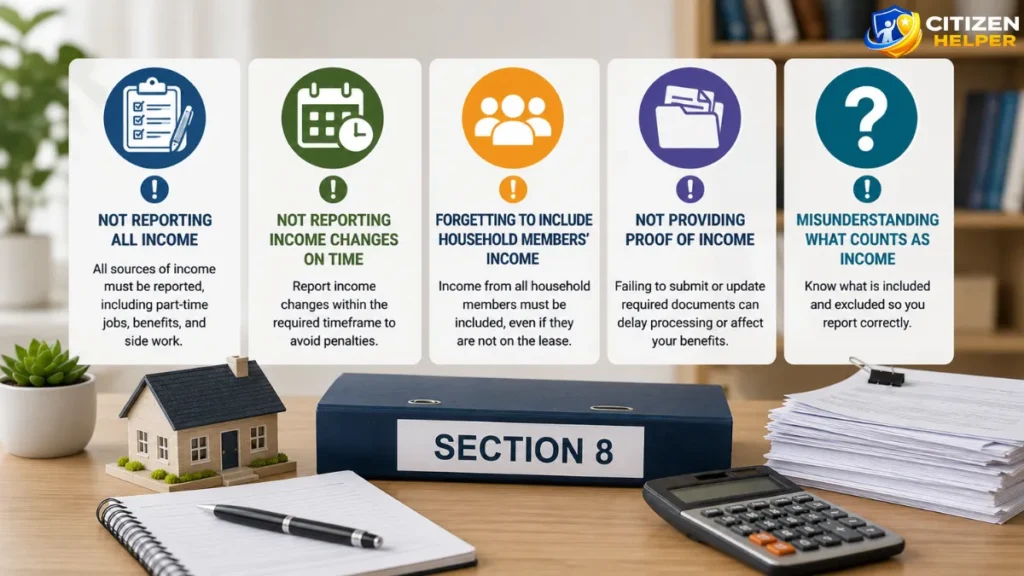
Accurate income reporting is important during the application process and after receiving assistance.
Common mistakes include:
- Leaving out part-time or temporary work
- Failing to report self-employment income
- Not reporting changes when required
- Assuming Social Security benefits do not count
- Confusing gross income with take-home pay
- Hiding income from household members
- Failing to report assets when requested
- Submitting outdated income documents
- Assuming a payment is excluded without confirmation
If you are unsure how to report income, ask the housing agency for instructions.
Conclusion:
Section 8 income limits vary by location, household size, local median income, and current HUD rules. There is no single income amount that determines eligibility across the United States.
To estimate whether you may qualify, check HUD’s current income limits for your area and household size. You should also contact the public housing agency where you plan to apply because the agency makes the final eligibility determination.
Report all requested income and household information accurately. Meeting the income limit may make you eligible to apply, but it does not guarantee placement on a waiting list or receipt of a Housing Choice Voucher.
Frequently Asked Questions (FAQ)
What is the maximum income for Section 8?
There is no single maximum income for Section 8 nationwide. The applicable limit depends on your location, household size, and current HUD income-limit calculations.
Are Section 8 income limits based on gross or net income?
Housing agencies generally use annual income calculated under HUD rules when determining eligibility. This is not necessarily the same as take-home pay or taxable income.
Do Section 8 income limits change every year?
HUD periodically publishes updated income limits. Check the current HUD limits and confirm them with the housing agency before applying.
Does Social Security count toward the Section 8 income limit?
Social Security benefits are generally included, although certain payments may receive different treatment under federal rules.
Can I get Section 8 if I work?
Yes. Having a job does not automatically disqualify you. Your total household income must meet the applicable requirements.
Can I qualify for Section 8 if I receive SSI or SSDI?
Possibly. SSI or SSDI recipients may qualify if their household income and other circumstances meet the program requirements.
Does Section 8 use the federal poverty level?
HUD income limits are not based only on the federal poverty level. HUD generally uses area median income and other federal rules. The extremely low-income limit also considers the applicable federal poverty guideline.
Does meeting the income limit guarantee a voucher?
No. You must meet all eligibility requirements, and assistance depends on waiting-list selection and available funding.