Falling behind on rent can be stressful, especially when an unexpected job loss, medical expense, reduced work hours, or family emergency affects your income. If you are struggling to pay rent, some churches and faith-based organizations may provide emergency financial assistance or connect you with local programs that can help.
Finding churches that help with rental assistance often requires contacting several organizations because funding, eligibility rules, and service areas vary by location. Some churches provide direct help with past-due rent, while others work through larger charitable organizations, offer referrals, or help with related needs such as utilities, food, transportation, and temporary housing.
This guide explains which churches and faith-based organizations may help with rent, how to find assistance near you, what documents you may need, and what to do if local church funding is unavailable.
Quick Answer: Can Churches Help Pay Your Rent?
Yes. Some churches and faith-based organizations provide emergency rental assistance to people experiencing financial hardship. However, help is not available at every church, and funding may be limited.
Depending on the organization and available resources, assistance may include:
- A one-time payment toward past-due rent
- Help preventing eviction
- Payment made directly to a landlord
- Emergency housing or shelter
- Referrals to local rental assistance programs
- Help with utilities, food, or other expenses
- Financial counseling or case-management services
Many churches prioritize people who live within their service area or are facing an immediate housing crisis. You usually do not have to be a member of a church to ask for help, although policies differ among organizations.
Churches and Faith-Based Organizations That May Help With Rent

There is no single nationwide church rental assistance program that guarantees help in every community. Most assistance is provided locally and depends on donations, grants, partnerships, and available funding.
The following organizations are good places to begin your search.
1. The Salvation Army
The Salvation Army is a Christian organization with local service centers throughout the United States. Some locations provide emergency assistance for rent, utilities, and other essential household expenses.
Rental assistance may be available to households facing circumstances such as:
- Loss of income
- Reduced work hours
- Unexpected expenses
- Risk of eviction
- Temporary financial hardship
- Housing instability
Programs differ by location. Some local Salvation Army offices may provide direct financial help, while others may refer applicants to community programs with available funding.
You may need to provide proof of income, identification, a lease, a past-due rent notice, or other documents. Assistance is not guaranteed, and funds may be limited.
Official Source: The Salvation Army USA – Utility and Rent Assistance
2. Catholic Charities
Catholic Charities agencies provide a wide range of services to individuals and families across the United States. Depending on the local agency, services may include emergency rental assistance, affordable housing support, homelessness prevention, temporary shelter, utility assistance, and referrals.
You generally do not have to be Catholic to request help. Local Catholic Charities agencies often serve people based on need and program eligibility rather than religious membership.
Available services vary because local agencies operate different programs. One office may have funds for past-due rent, while another may focus on housing counseling, emergency shelter, or referrals.
Contact the Catholic Charities agency serving your area to ask:
- Whether emergency rental assistance is available
- Which cities or counties the agency serves
- Whether applications are currently open
- What eligibility requirements apply
- Which documents are required
Official Source: Catholic Charities USA – Affordable Housing
3. The Society of St. Vincent de Paul
The Society of St. Vincent de Paul is a Catholic charitable organization with local councils and parish-based groups throughout many parts of the United States.
Local programs may provide emergency help with:
- Rent
- Utilities
- Food
- Clothing
- Transportation
- Other essential needs
Some local St. Vincent de Paul groups may conduct an interview or home visit to better understand a household’s circumstances. Assistance depends on local funding, eligibility requirements, and the type of help available.
You generally do not need to be Catholic to request assistance. However, services and application procedures vary among local councils.
Contact a nearby Catholic parish or local St. Vincent de Paul council to ask whether rental assistance is available in your ZIP code.
4. Lutheran Social Services Organizations
Lutheran social service organizations operate in many communities and may provide housing-related assistance.
Depending on the local organization, services may include:
- Homelessness prevention
- Emergency financial assistance
- Supportive housing
- Temporary housing
- Housing counseling
- Help for veterans
- Refugee and immigrant support
- Case management
Not every Lutheran organization provides direct rent payments. Some may help applicants find government programs, nonprofit assistance, or other local resources.
Search for a Lutheran social services organization in your state or contact a nearby Lutheran church for information about community assistance programs.
5. The United Methodist Church and Local Ministries
Some United Methodist churches operate local assistance programs or participate in community outreach ministries.
Help may include:
- Emergency rent assistance
- Utility assistance
- Food pantries
- Temporary lodging
- Transportation assistance
- Referrals to community programs
Funding and services are determined locally. A church may provide direct financial assistance, contribute part of the amount owed, or connect applicants with another organization.
Contact local United Methodist churches and ask whether they have a benevolence fund, emergency assistance ministry, or community outreach program.
6. Episcopal Churches and Episcopal Charities
Some Episcopal churches and affiliated charities provide emergency assistance to people experiencing financial hardship.
Available help may include:
- Limited rental assistance
- Utility assistance
- Emergency shelter
- Food assistance
- Housing referrals
- Case-management services
Programs vary by church, diocese, and community. Some churches may operate their own assistance funds, while others partner with local nonprofit organizations.
Ask whether the church has a community assistance program, outreach ministry, discretionary fund, or local housing partnership.
7. Presbyterian Churches and Community Programs
Some Presbyterian churches provide emergency help through local mission programs, community ministries, or church assistance funds.
Depending on available resources, a local church may help with:
- A portion of past-due rent
- Utility bills
- Food
- Transportation
- Emergency lodging
- Referrals to other agencies
Many local churches have limited budgets and may only assist residents within certain ZIP codes or geographic areas.
8. Local Baptist Churches
Some Baptist churches operate benevolence ministries or emergency assistance programs for local residents.
A church may provide:
- Limited help with rent
- Utility assistance
- Food pantry services
- Temporary shelter referrals
- Financial counseling
- Connections to community resources
Each Baptist church generally manages its own programs and funding. Contact individual churches in your area rather than assuming that all Baptist churches provide the same services.
9. Local Community Churches and Faith-Based Ministries
Independent community churches, nondenominational churches, and local faith-based ministries may also help people experiencing a housing emergency.
Smaller churches may not advertise assistance online. However, they may have:
- Benevolence funds
- Emergency assistance programs
- Community outreach ministries
- Partnerships with local charities
- Volunteer support programs
Some churches may not be able to pay rent directly but may help with groceries, utilities, transportation, or other expenses. This could allow a household to use more of its income toward rent.
How to Find Churches That Help With Rental Assistance Near You
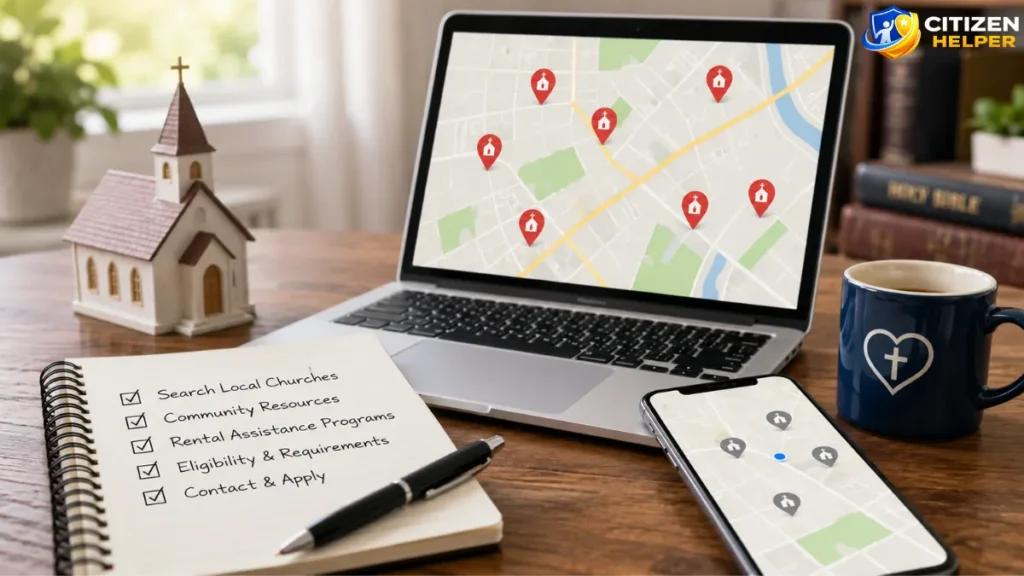
Rental assistance is usually provided locally. The fastest way to find help is to contact organizations serving your city, county, or ZIP code.
Call 211
Calling 211 is one of the best ways to locate rental assistance in your community.
A 211 specialist may connect you with:
- Churches offering emergency assistance
- Local charities
- Rental assistance programs
- Eviction-prevention services
- Utility assistance
- Emergency shelters
- Food programs
- Housing counseling
You can usually dial 211 from a phone or search for local resources through the 211 website.
Before calling, gather information about your current housing situation, household income, rent owed, and any eviction notices you have received.
Official Source: 211 – Housing Expenses
Search Online Using Your Location
Try searches such as:
- Churches that help with rent near me
- Churches that help with rent in [city]
- Emergency rental assistance in [county]
- Church benevolence fund near me
- Faith-based rental assistance in [ZIP code]
- Eviction-prevention assistance near me
Include your city, county, or ZIP code to find organizations that serve your area.
Contact Churches Directly
Call nearby churches and ask whether they offer emergency financial assistance.
You can say:
“Hello, I am experiencing a temporary financial hardship and need help with rent. Does your church have a benevolence fund, rental assistance program, or community outreach program?”
If the church cannot help directly, ask whether staff members know of another local organization that may have available funding.
Contact Local Community Action Agencies
Community Action Agencies help low-income individuals and families access local services. Depending on the area and available funding, services may include housing assistance, utility assistance, financial counseling, and referrals.
These agencies are not churches, but they often work with local governments, nonprofits, and faith-based organizations.
Ask Your Landlord or Property Manager
Some landlords and property managers know about local rental assistance programs because they have worked with tenants who received help in the past.
Ask whether the landlord is willing to:
- Accept payment from a church or charity
- Provide a rent ledger
- Complete required assistance forms
- Agree to a reasonable payment plan
Do not wait until an eviction case is advanced if you can contact the landlord earlier.
Do You Have to Be a Church Member to Receive Rental Assistance?
Not always. Many churches and faith-based charities help people regardless of church membership or religious affiliation.
However, each organization establishes its own eligibility rules. Some churches may prioritize:
- Members of the local community
- Residents within specific ZIP codes
- People referred by partner organizations
- Households experiencing an emergency
- Families with children
- Older adults
- Veterans
- People with disabilities
- People at immediate risk of homelessness
You may be asked about your financial situation, but you should not assume that you must join a church or participate in religious activities to request help.
Ask the organization directly about its policies.
What Documents Do You Need to Get Help With Rent?
Document requirements vary. Having common documents ready may make the application process easier.
You may be asked to provide:
- Government-issued photo identification
- Current lease or rental agreement
- Proof of address
- Past-due rent notice
- Eviction notice, if applicable
- Rent ledger showing the amount owed
- Landlord’s name and contact information
- Proof of household income
- Recent pay stubs
- Benefit award letters
- Bank statements
- Proof of job loss or reduced income
- Social Security numbers, when required
- Information about household members
- A written explanation of the financial emergency
Do not send sensitive personal information until you have confirmed that the organization is legitimate and understand how the information will be used.
How Does Church Rental Assistance Usually Work?

The process differs by organization, but it may include the following steps.
Step 1: Contact the Church or Organization
Call, visit the organization’s official website, or contact the local office.
Ask whether rental assistance is currently available and whether the organization serves your ZIP code.
Step 2: Complete an Application or Screening
You may need to answer questions about:
- Household size
- Income
- Monthly expenses
- Amount of rent owed
- Reason for the financial hardship
- Current housing situation
Some organizations conduct a phone interview before providing an application.
Step 3: Submit Supporting Documents
Provide the requested documents by the deadline.
Missing information may delay the review.
Step 4: Allow the Organization to Contact Your Landlord
The organization may need to verify:
- The amount of rent owed
- Your tenancy
- The landlord’s contact information
- Whether a payment can prevent eviction
- Where an approved payment should be sent
Step 5: Wait for a Decision
Approval depends on eligibility, available funding, and program rules.
Some organizations respond quickly to urgent cases, while others may need more time. Applying does not guarantee assistance.
Step 6: Payment May Go Directly to the Landlord
Many churches and charities do not give rental assistance money directly to applicants.
Instead, an approved payment may be sent to the landlord or property-management company.
How Much Rental Assistance Can a Church Provide?
There is no standard amount.
The amount depends on factors such as:
- Available funding
- Amount of rent owed
- Household circumstances
- Local program limits
- Number of people requesting help
- Whether other agencies are contributing
- Whether the assistance can prevent eviction
A church may pay the full amount owed, but partial assistance is more common when funds are limited.
Some organizations may ask whether you can pay part of the balance or receive help from another program.
Can a Church Help With a Security Deposit or First Month’s Rent?
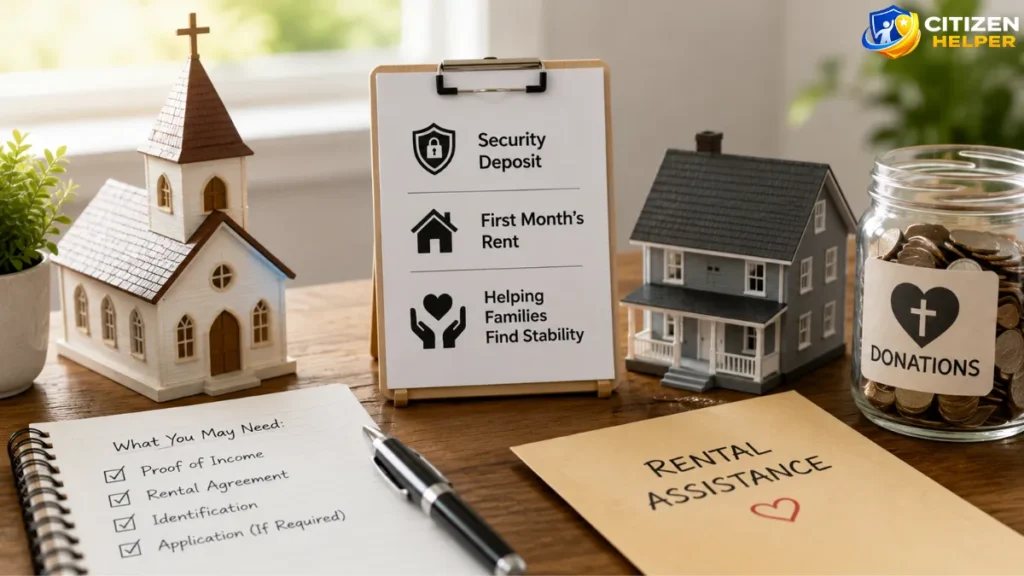
Some churches and faith-based organizations may help with move-in costs, including:
- Security deposits
- First month’s rent
- Application fees
- Utility deposits
- Temporary lodging
However, move-in assistance may be offered through a different program than emergency help for past-due rent.
Ask specifically whether the organization helps with security deposits or relocation expenses.
Can Churches Help Stop an Eviction?

Some churches may provide emergency financial assistance that helps a tenant avoid eviction. However, receiving help depends on available funding, the amount owed, and how far the eviction process has progressed.
If you have received an eviction notice:
- Contact local assistance programs immediately.
- Tell the organization that you have an eviction deadline.
- Keep copies of all notices and court documents.
- Ask whether emergency funding is available.
- Contact a local legal aid organization for legal information or representation.
- Attend required court hearings.
A church payment does not automatically cancel an eviction case. Confirm any agreement with your landlord and seek legal help when needed.
What If a Church Cannot Pay Your Rent?
A church may be unable to help because funding has run out, the organization does not serve your area, or your situation does not meet its program requirements.
If one organization cannot help, try other options.
You may be able to contact:
- 211
- The Salvation Army
- Catholic Charities
- The Society of St. Vincent de Paul
- Local Community Action Agencies
- County or city housing departments
- Local housing authorities
- Homelessness-prevention programs
- Legal aid organizations
- Local charities and nonprofit organizations
Ask each organization whether it can provide a referral. Local agencies often know which programs currently have funding.
Other Ways to Reduce Expenses While Seeking Rent Help
If direct rental assistance is unavailable, help with other essential expenses may make it easier to pay rent.
Look for assistance with:
- Food
- Electricity
- Heating
- Water bills
- Child care
- Transportation
- Medical expenses
- Prescription costs
Church food pantries and utility assistance programs may reduce other household costs while you work on a rent payment plan.
How to Avoid Rental Assistance Scams
People facing eviction or financial hardship may be targeted by scammers.
Watch for warning signs, including:
- Guaranteed approval in exchange for a fee
- Requests for gift cards or cryptocurrency
- Pressure to provide personal information immediately
- Requests for online banking passwords
- Unverified social media accounts offering rent money
- Claims that payment can guarantee government assistance
- Websites pretending to represent a church or charity
Before providing personal information:
- Confirm the organization’s official phone number or website.
- Contact the church or charity directly.
- Ask how payments are made.
- Request information about the application process.
- Avoid paying a fee to apply for emergency assistance.
Legitimate programs may request documents, but you should understand why the information is needed.
Tips for Improving Your Chances of Finding Help
Rental assistance funds can be limited. These steps may help you complete applications more efficiently:
- Start contacting organizations as soon as you know you may miss rent.
- Call several churches and agencies.
- Keep your lease and rent documents ready.
- Explain your situation clearly and accurately.
- Provide requested documents promptly.
- Keep a record of every organization you contact.
- Ask whether new funding may become available later.
- Ask for referrals if an organization cannot help.
- Communicate with your landlord about possible payment arrangements.
Do not submit false information or hide household income. Organizations may verify application details before approving assistance.
Conclusion:
Finding churches that help with rental assistance may take several phone calls because programs, funding, eligibility rules, and service areas vary across the country.
Start by contacting local churches, The Salvation Army, Catholic Charities, the Society of St. Vincent de Paul, and other faith-based organizations in your community. Calling 211 can also help you locate current rental assistance, eviction-prevention services, and housing resources near you.
Apply as early as possible, prepare your lease and income documents, and explain your financial situation accurately. If one church cannot help, ask for a referral and continue contacting other organizations. Even when direct rent assistance is unavailable, help with food, utilities, or other expenses may reduce financial pressure and make it easier to remain in your home.
Frequently Asked Questions (FAQ)
What churches help with rental assistance?
The Salvation Army, local Catholic Charities agencies, the Society of St. Vincent de Paul, and some Lutheran, Methodist, Episcopal, Presbyterian, Baptist, and community churches may offer rental assistance or housing referrals. Availability varies by location.
Do churches give money directly to people for rent?
Some churches provide direct rental assistance, but payments are often sent to the landlord or property-management company rather than to the applicant.
Can I get rental assistance if I am not religious?
Many faith-based organizations assist people based on need and eligibility rather than religious affiliation. Policies vary, so contact the local organization directly.
Can churches help with past-due rent?
Some churches may help with past-due rent when funding is available. You may need to provide a lease, rent ledger, past-due notice, and proof of financial hardship.
Can a church pay all of my rent?
Possibly, but full payment is not guaranteed. Some churches provide only partial assistance because funds are limited.
Can churches help with rent every month?
Most church rental assistance is intended for emergencies and may be limited to one-time or short-term help. Long-term assistance is less common.
Can I receive help from more than one organization?
You may be able to receive assistance from multiple organizations, especially if one program pays only part of the amount owed. You should disclose other assistance when asked and follow each program’s rules.