Many people wonder whether they can collect disability benefits and Social Security at the same time. The answer depends on the type of disability benefit you receive and the type of Social Security benefit you’re referring to. If you’re asking, “can you receive disability and Social Security,” you’re not alone—it’s one of the most common questions people have when planning for retirement or dealing with a disability.
The Social Security Administration (SSA) manages several benefit programs, including Social Security Disability Insurance (SSDI), Supplemental Security Income (SSI), and Social Security retirement benefits. Each program has its own eligibility rules, and understanding how they work together can help you know what benefits you may qualify for now and in the future.
In this guide, you’ll learn when you can receive disability and Social Security benefits at the same time, how SSDI and SSI differ from retirement benefits, and what happens to your payments as you reach retirement age.
Quick Answer
Yes, in many situations you can receive disability and Social Security benefits, but it depends on which programs you’re receiving. For example, many people receive Social Security Disability Insurance (SSDI) before reaching full retirement age, and those benefits generally convert to Social Security retirement benefits when they reach full retirement age. Some people may also qualify for Supplemental Security Income (SSI) along with other Social Security benefits if they meet the program’s income and resource limits.
Understanding the difference between SSDI, SSI, and Social Security retirement benefits is the key to knowing what benefits you may receive.
What Does “Disability and Social Security” Mean?
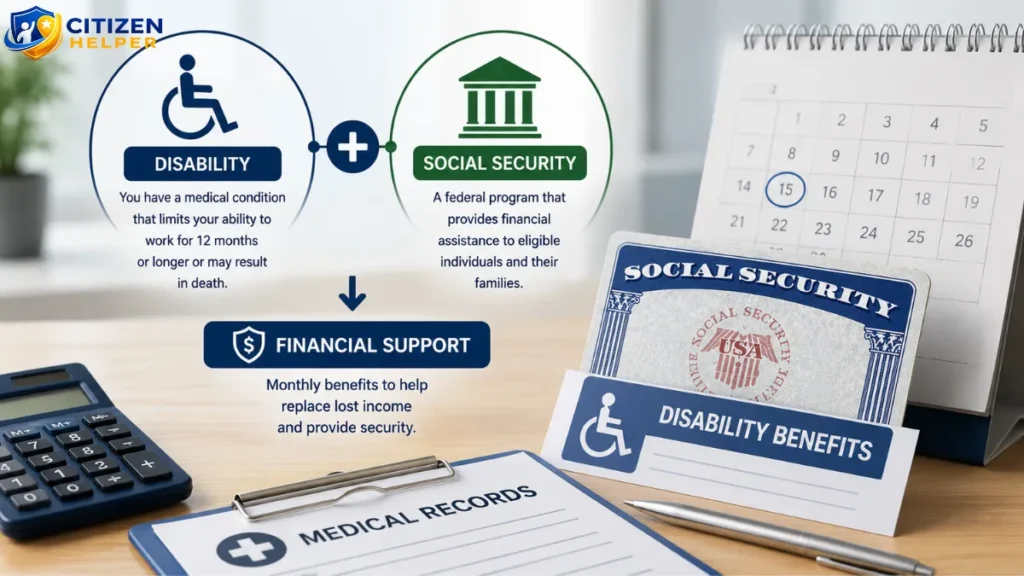
When people ask whether they can receive disability and Social Security, they often use the word “Social Security” to describe different programs. However, the Social Security Administration operates several separate benefit programs.
The most common programs include:
- Social Security Disability Insurance (SSDI) for eligible workers who have a qualifying disability and sufficient work credits.
- Supplemental Security Income (SSI) for people with limited income and resources who are elderly, blind, or have a qualifying disability.
- Social Security retirement benefits for eligible workers who have reached the age at which they can claim retirement benefits.
Because these programs have different eligibility requirements, the answer to whether you can receive multiple benefits depends on which benefits you’re discussing.
For example, receiving SSDI is different from receiving SSI, and each program interacts differently with Social Security retirement benefits.
Can You Receive Disability and Social Security at the Same Time?
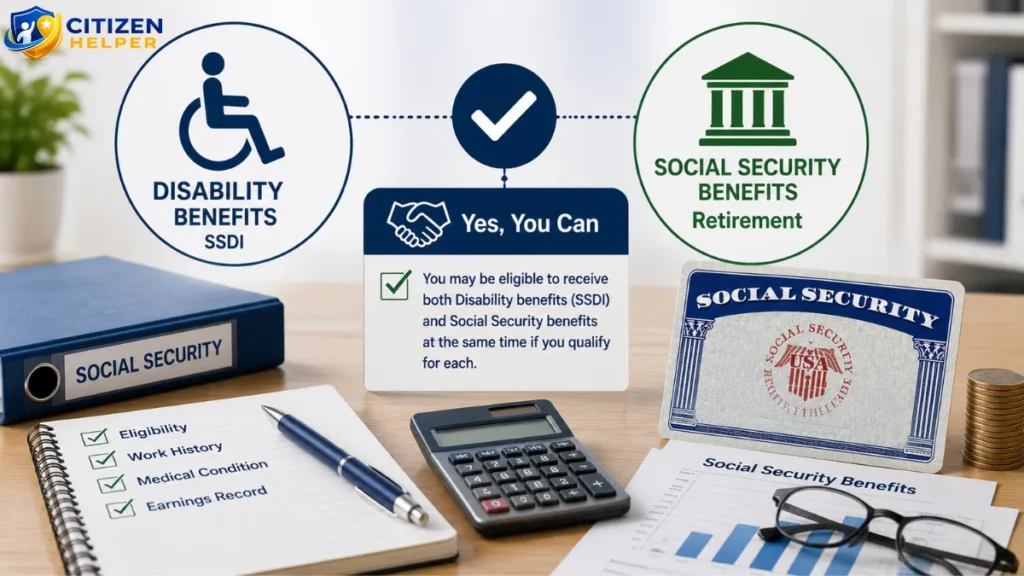
Yes, but the answer depends on the type of disability benefit you’re receiving.
Many people who receive SSDI are also receiving a Social Security benefit in the broader sense because SSDI itself is a Social Security program funded through payroll taxes. However, when people ask this question, they are usually referring to receiving disability benefits and Social Security retirement benefits.
Here are the most common situations:
- Receiving SSDI before retirement age, which generally converts to retirement benefits when you reach full retirement age.
- Receiving SSI while also receiving another Social Security benefit, if you continue to meet SSI’s financial eligibility rules.
- Receiving retirement benefits instead of SSDI after your disability benefits automatically convert at full retirement age.
Not everyone qualifies to receive payments from more than one Social Security program. Eligibility depends on work history, age, disability status, income, and resources.
Understanding which benefit you currently receive is the first step toward determining whether you may also qualify for another program.
SSDI vs. Social Security Retirement Benefits
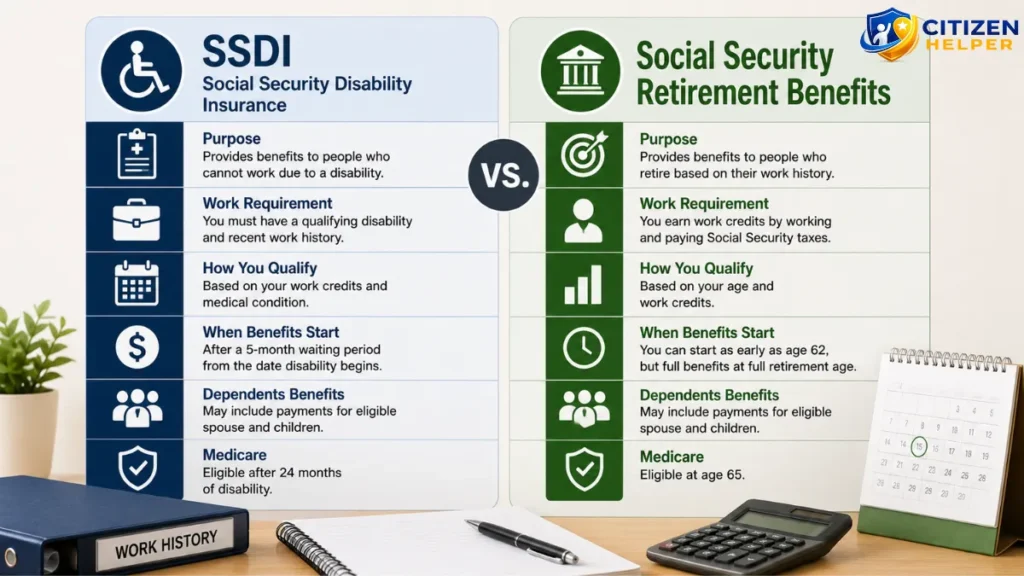
One of the biggest sources of confusion is the relationship between SSDI and Social Security retirement benefits.
Although they are different benefit categories, both programs are administered by the Social Security Administration and are generally based on a worker’s earnings history.
Social Security Disability Insurance (SSDI)
SSDI provides monthly benefits to eligible workers who have a qualifying disability and have earned enough work credits through employment covered by Social Security.
The program is designed for people who can no longer perform substantial work because of a medical condition that meets the SSA’s disability rules.
Social Security Retirement Benefits
Social Security retirement benefits are available to eligible workers who choose to begin retirement benefits after becoming eligible based on age.
Unlike SSDI, retirement benefits are not based on disability. Instead, they are based primarily on your age and lifetime earnings that were subject to Social Security taxes.
The Key Difference
The primary difference is why you’re receiving benefits.
- SSDI is based on disability and work history.
- Retirement benefits are based on age and work history.
For many people receiving SSDI, there is an important transition later in life. When they reach full retirement age, their SSDI benefits generally convert automatically to Social Security retirement benefits. This change usually does not require a new application, although the benefit category changes from disability to retirement.
Because this transition happens automatically for most beneficiaries, many people continue receiving monthly payments without interruption after reaching full retirement age.
SSI vs. Social Security Retirement Benefits
Supplemental Security Income (SSI) is different from both SSDI and Social Security retirement benefits.
Unlike SSDI, SSI is not based on your work history or the amount of Social Security taxes you’ve paid. Instead, it is a needs-based program for people with limited income and resources who meet the program’s eligibility requirements.
Because SSI has financial eligibility rules, receiving another source of income—including Social Security retirement benefits—may affect your SSI payment amount or your continued eligibility.
For some people, Social Security retirement benefits may reduce their monthly SSI payment. Others may no longer qualify for SSI if their countable income exceeds the program’s limits.
However, not everyone experiences the same outcome. The effect depends on each person’s financial situation and the amount of other income they receive.
If you currently receive SSI and are approaching retirement age, it’s important to understand how retirement benefits may affect your overall benefit package before making decisions about when to claim Social Security retirement benefits.
When Can You Receive SSDI and Social Security Retirement Benefits?
A common misunderstanding is that people receive full SSDI benefits and a separate full Social Security retirement benefit at the same time based on the same work record. In most cases, that is not how the programs work.
If you qualify for SSDI before reaching full retirement age, you generally receive SSDI benefits instead of retirement benefits. When you reach your full retirement age (FRA), the Social Security Administration (SSA) automatically converts your disability benefits to retirement benefits.
For most beneficiaries:
- You continue receiving monthly payments without needing to submit a new retirement application.
- The benefit category changes from disability benefits to retirement benefits.
- In many cases, the monthly benefit amount remains about the same, although individual circumstances may vary.
This automatic conversion helps ensure there is no interruption in benefits simply because you reached retirement age.
If you become eligible for retirement benefits while already receiving SSDI, you generally do not receive two separate monthly payments based on the same earnings record. Instead, your benefit transitions from one Social Security program to another.
Can You Receive SSI and Social Security Retirement Benefits?
Yes, some people can receive Supplemental Security Income (SSI) and Social Security retirement benefits at the same time.
However, because SSI is a needs-based program, your Social Security retirement benefit counts as income when the SSA determines your SSI eligibility.
Depending on your financial situation:
- Your SSI payment may be reduced.
- You may continue receiving both benefits.
- You may no longer qualify for SSI if your countable income exceeds the program’s limits.
The SSA reviews each person’s circumstances individually. Factors such as other income, living arrangements, and available resources may also affect SSI eligibility.
If you currently receive SSI and are considering claiming Social Security retirement benefits, reviewing your situation with the SSA can help you understand how your monthly benefits may change.
Official Source: Social Security Administration – Supplemental Security Income (SSI)
How Benefits Change at Full Retirement Age
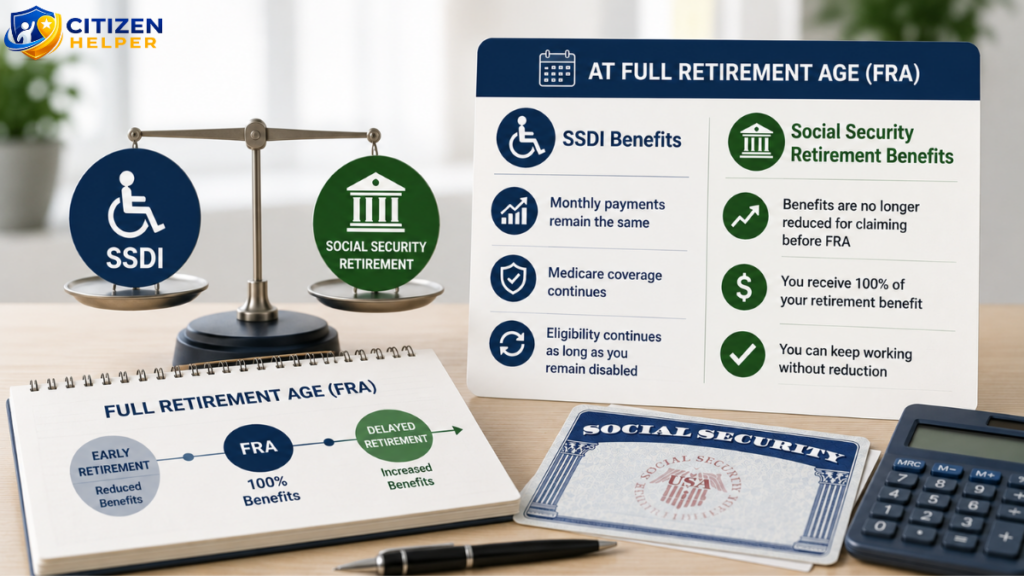
Reaching full retirement age is an important milestone for people receiving SSDI.
Once you reach your full retirement age:
- Your SSDI benefits generally convert automatically to Social Security retirement benefits.
- You usually do not need to submit a separate retirement application.
- Your monthly payments generally continue without interruption.
- The SSA changes the type of benefit you receive from disability to retirement.
Although the benefit category changes, many beneficiaries notice little or no difference in the amount they receive each month.
This automatic conversion is one reason many people continue receiving benefits without realizing that the underlying program has changed.
If you have questions about your individual retirement age or expected benefit transition, you can review your Social Security account or contact the SSA for personalized information.
Working Can Affect Your Benefits
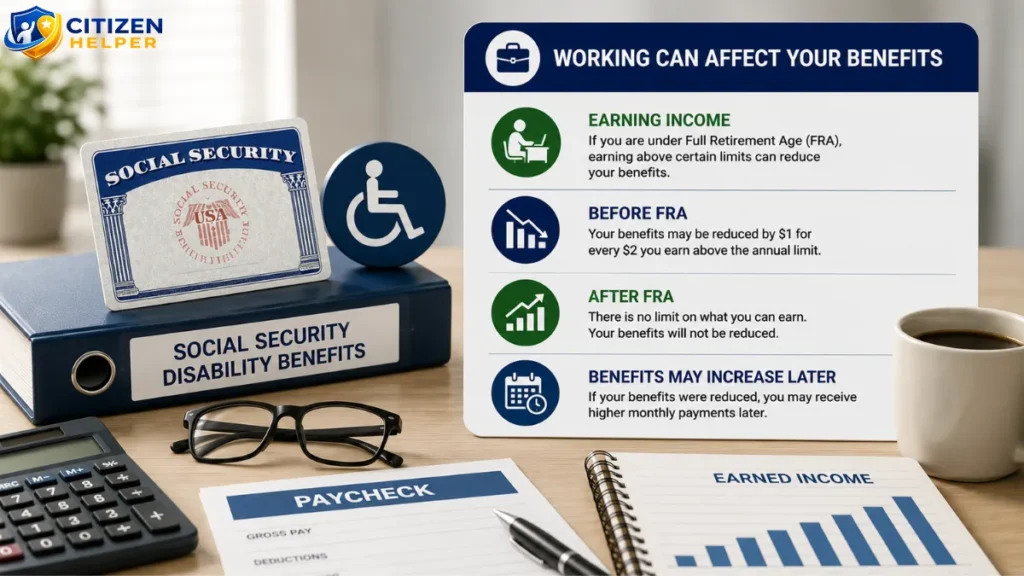
Returning to work may affect disability benefits differently depending on which Social Security program you receive.
If You Receive SSDI
The SSA offers work incentives that encourage beneficiaries to attempt returning to work while protecting benefits under certain circumstances.
Whether your SSDI benefits continue depends on factors such as:
- The type of work you perform
- How much you earn
- Whether you continue to meet the SSA’s disability requirements
Because these rules can be complex, review the SSA’s current work incentive programs before accepting employment.
If You Receive SSI
SSI has different rules because it is based on financial need.
If your earnings increase, your SSI payment may decrease. However, earning income does not automatically mean your SSI benefits stop. The SSA uses specific formulas to determine how earned income affects monthly SSI payments.
Since every situation is different, notify the SSA promptly if your employment status or income changes.
Common Situations People Ask About
Understanding a few real-life examples can make these rules easier to understand.
Scenario 1: Receiving SSDI Before Retirement
Maria is 60 and receives SSDI because of a qualifying disability. When she reaches her full retirement age, her SSDI benefits generally convert automatically to Social Security retirement benefits. She does not begin receiving two separate benefits based on the same work history.
Scenario 2: Receiving SSI and Retirement Benefits
James receives a small Social Security retirement benefit and also qualifies for SSI because he has limited income and resources. His retirement benefit is considered when calculating his SSI payment, which may reduce—but does not automatically eliminate—his SSI benefits.
Scenario 3: Returning to Work While Receiving SSDI
Angela receives SSDI and wants to return to work part-time. Before accepting a job, she reviews the SSA’s work incentive programs to understand how her earnings could affect her disability benefits.
These examples illustrate why there is no single answer that applies to everyone. The interaction between Social Security programs depends on each person’s age, work history, disability status, income, and other eligibility factors.
Common Mistakes to Avoid
Understanding how Social Security programs work together can help you avoid unnecessary confusion.
Assuming SSDI and Retirement Benefits Are Separate Lifetime Payments
Many people believe they will receive both a full SSDI payment and a full retirement benefit indefinitely. In most cases, SSDI converts to retirement benefits at full retirement age rather than continuing as a separate payment.
Confusing SSDI With SSI
Although both programs provide benefits to people with disabilities, they have different eligibility rules. SSDI is based on work history, while SSI is based on financial need.
Forgetting That SSI Has Income Limits
Receiving Social Security retirement benefits or other income may affect SSI eligibility or reduce the monthly SSI payment.
Not Reporting Changes to the SSA
If your income, employment, address, or living arrangements change, notify the SSA as required. Failing to report important changes could affect your eligibility or benefit amount.
Assuming Every Situation Is the Same
Benefit eligibility depends on many individual factors, including age, work history, disability status, and financial circumstances. Always review your specific situation using official SSA resources before making decisions about your benefits.
Conclusion:
If you’re asking, “can you receive disability and Social Security,” the answer is often yes, but it depends on the specific Social Security programs involved. Understanding the difference between Social Security Disability Insurance (SSDI), Supplemental Security Income (SSI), and Social Security retirement benefits is essential because each program follows its own eligibility rules.
For many people, SSDI provides benefits until they reach full retirement age, when those benefits generally convert automatically to Social Security retirement benefits. Others may qualify for both SSI and Social Security retirement benefits if they continue to meet the SSI program’s financial requirements.
Because every person’s work history, disability status, income, and retirement situation is different, it’s important to review your individual circumstances before making decisions about your benefits. The Social Security Administration provides tools and resources to help you understand your options and determine which programs you may qualify for.
Frequently Asked Questions (FAQ)
Can you receive disability and Social Security at the same time?
Yes, in some situations. The answer depends on which disability program you receive. People receiving SSDI generally have their benefits automatically convert to Social Security retirement benefits at full retirement age rather than receiving separate payments based on the same work record. Some people may also qualify for SSI while receiving Social Security retirement benefits if they continue to meet SSI’s income and resource limits.
Do SSDI benefits automatically become Social Security retirement benefits?
Yes. For most beneficiaries, SSDI benefits automatically convert to Social Security retirement benefits when they reach full retirement age. This transition typically happens automatically without requiring a new retirement application.
Can I receive SSI and Social Security retirement benefits together?
Possibly. SSI is a needs-based program, so your Social Security retirement benefit is counted when determining your SSI eligibility and payment amount. Some people qualify for both benefits, while others may see their SSI payment reduced or become ineligible because of their income.
Will my monthly payment change when SSDI converts to retirement benefits?
In many cases, beneficiaries continue receiving approximately the same monthly amount after their SSDI benefits convert to Social Security retirement benefits. However, every situation is different, and the SSA determines benefits based on each person’s record and eligibility.
Can I work while receiving disability benefits?
Possibly. The Social Security Administration has work incentive programs for SSDI beneficiaries, and SSI has separate rules that determine how earned income affects benefits. Because these rules are complex, review the SSA’s current guidance before returning to work.
Can my spouse receive Social Security benefits while I receive disability?
Your spouse’s eligibility for Social Security benefits depends on several factors, including your earnings record, your spouse’s age, and the type of benefits involved. The SSA determines eligibility based on each family’s circumstances.
How can I find out which Social Security benefits I qualify for?
The best way is to create or sign in to your personal Social Security account to review your earnings record and estimated benefits, or contact the Social Security Administration for assistance.